东北大学学报(自然科学版) ›› 2025, Vol. 46 ›› Issue (11): 30-36.DOI: 10.12068/j.issn.1005-3026.2025.20240225

• 信息与控制 • 上一篇    下一篇

基于Stacking集成学习的CT图像质量分类

刘怡文1,2(), 温涛2, 毕远国2, 朱宏博2,3   

  1. 1.东北大学 信息科学与工程学院,辽宁 沈阳 110819
    2.东北大学 计算机科学与工程学院,辽宁 沈阳 110169
    3.沈阳理工大学 信息科学与工程学院,辽宁 沈阳 110159
  • 收稿日期:2024-12-10 出版日期:2025-11-15 发布日期:2026-02-07
  • 通讯作者: 刘怡文
  • 作者简介:毕远国(1980—),男,辽宁丹东人,东北大学教授,博士生导师.
  • 基金资助:
    辽宁省博士科研启动基金计划项目(2023-BS-130);国家自然科学基金资助项目(62473093)

CT Image Quality Classification Based on Stacking Ensemble Learning

Yi-wen LIU1,2(), Tao WEN2, Yuan-guo BI2, Hong-bo ZHU2,3   

  1. 1.School of Information Science & Engineering,Northeastern University,Shenyang 110819,China
    2.School of Computer Science & Engineering,Northeastern University,Shenyang 110169,China
    3.School of Information Science & Engineering,Shenyang Ligong University,Shenyang 110159,China.
  • Received:2024-12-10 Online:2025-11-15 Published:2026-02-07
  • Contact: Yi-wen LIU

摘要:

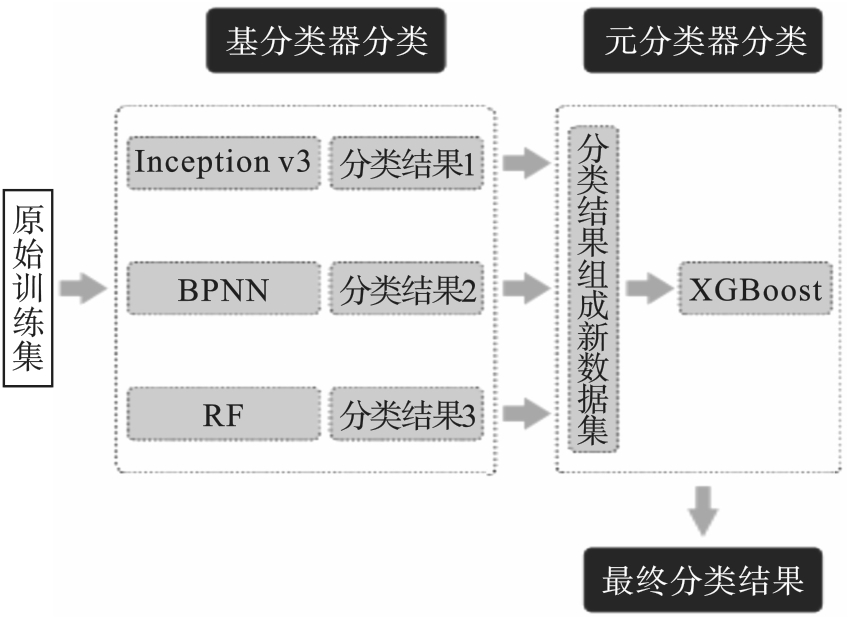
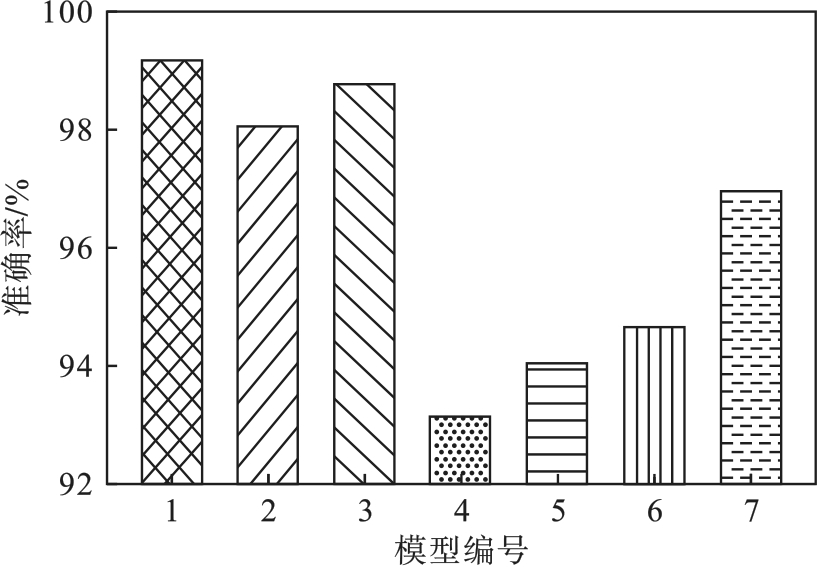
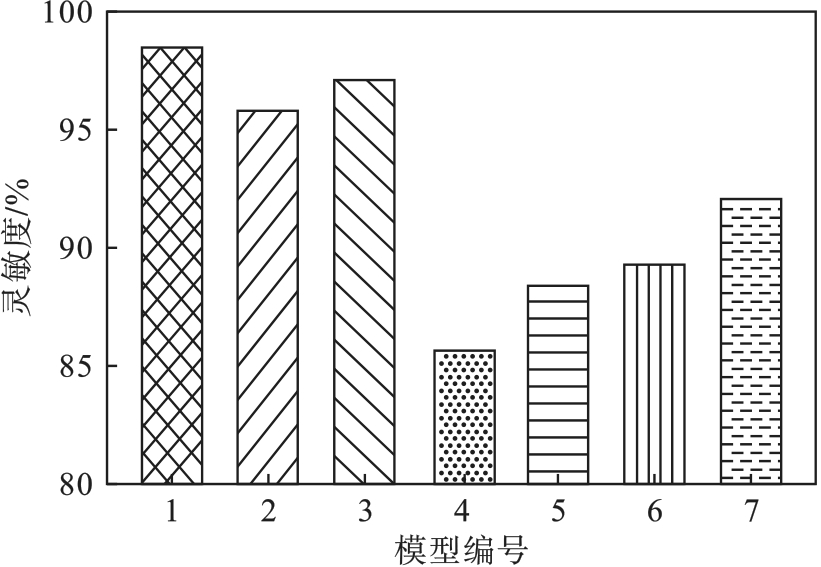
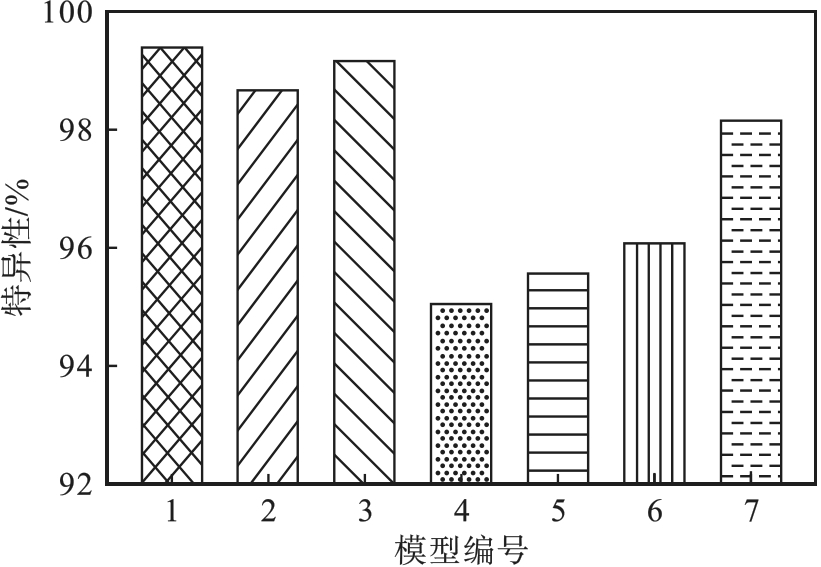
计算机断层扫描成像因低成本和高效性成为医学影像的一种重要形式,然而图像质量下降对诊断和预后造成严重干扰.针对单分类器性能有限,无法满足高精度CT(computed tomography)图像质量分类需求的问题,提出一种面向伪影识别的Stacking集成学习方法.基于分类多样性和各分类器性能考虑,选取具有异构性能的随机森林(random forest,RF)、反向传播神经网络(back propagation neural network,BPNN)和Inception v3作为基分类器,采用极限梯度提升(eXtreme gradient boosting,XGBoost)作为元学习器.实验结果表明,该方法准确率达到99.2%,使得模型的分类效果有所保证,能够满足不均衡数据集条件下CT图像质量分类的高准确率需求.

关键词: CT图像, 质量分类, Stacking集成学习, 不均衡数据集, 复杂网络

Abstract:

Computed tomography (CT) imaging has become an important form of medical imaging due to its low cost and high efficiency. However, the decline in image quality causes serious interference to diagnosis and prognosis. The limited performance of a single classifier cannot meet the requirements of high-precision CT image quality classification. To address this issue, a method based on Stacking ensemble learning was designed for artifact recognition. Based on classification diversity and individual classifier performance, random forest (RF), back propagation neural network (BPNN), and Inception v3, all of which are heterogeneous, were selected as the base classifiers. Extreme gradient boosting (XGBoost) was used as the meta-learner. The experimental results show that the accuracy of this method reaches 99.2%, which ensures the classification effect of the model and can meet the high accuracy requirements for CT image quality classification under the condition of an unbalanced dataset.

Key words: CT image, quality classification, Stacking ensemble learning, unbalanced dataset, complex network

中图分类号: