
东北大学学报(自然科学版) ›› 2025, Vol. 46 ›› Issue (12): 9-18.DOI: 10.12068/j.issn.1005-3026.2025.20240095
黄敏1( ), 都业新1, 于昊1, 王兴伟2
收稿日期:2024-04-22
出版日期:2025-12-15
发布日期:2026-02-09
通讯作者:
黄敏
作者简介:王兴伟(1968—),男,辽宁盖州人,东北大学教授,博士生导师.
基金资助:
Min HUANG1(), Ye-xin DU1, Hao YU1, Xing-wei WANG2
Received:2024-04-22
Online:2025-12-15
Published:2026-02-09
Contact:
Min HUANG
摘要:
针对车货匹配平台决策中未充分考虑碳排放影响的问题,提出了考虑碳排放和平台收益的双目标车货匹配模型.首先,构建以最小化总碳排放量和最大化车货匹配平台收益为双目标、以载重和时间为约束的优化模型.其次,针对模型的多目标和NP(non-deterministic polynomial)难特性,设计包含嵌入可行性分析的编码规则、自适应精英保留策略和非线性递减惯性权重的多目标粒子群优化(PSO)算法.3种规模算例的对比结果表明,该算法在收敛性和均匀性上优于NSPSO算法、改进的NSGA-II算法和多目标灰狼算法,运行时间也优于后两种算法.最后通过分析货车单位碳排放量和货主送达时间要求对碳排放的影响,为平台决策提供管理启示.
中图分类号:
黄敏, 都业新, 于昊, 王兴伟. 考虑碳排放的双目标车货匹配问题研究[J]. 东北大学学报(自然科学版), 2025, 46(12): 9-18.
Min HUANG, Ye-xin DU, Hao YU, Xing-wei WANG. Research on Bi-objective Vehicle-Cargo Matching Problem Considering Carbon Emissions[J]. Journal of Northeastern University(Natural Science), 2025, 46(12): 9-18.
| 符号 | 含义 |
|---|---|
| 车主集合 | |
| 货主集合 | |
| 车主与货主之间的距离 | |
| 货主与运送目的地之间的距离 | |
| 货车行驶的平均速度 | |
| 货主支付的费用 | |
| 平台对货主支付费用的抽成比例 | |
| 车主驾驶车辆的单位碳排放 | |
| 车主驾驶车辆的最大载重 | |
| 车主驾驶车辆的空载质量 | |
| 货主的货物质量 | |
| 货主要求货物送达目的地时间,假设匹配时刻为计时零点 | |
| 车主和货主的匹配情况,匹配为1,反之为0 |
表1 符号定义
Table 1 Symbol definitions
| 符号 | 含义 |
|---|---|
| 车主集合 | |
| 货主集合 | |
| 车主与货主之间的距离 | |
| 货主与运送目的地之间的距离 | |
| 货车行驶的平均速度 | |
| 货主支付的费用 | |
| 平台对货主支付费用的抽成比例 | |
| 车主驾驶车辆的单位碳排放 | |
| 车主驾驶车辆的最大载重 | |
| 车主驾驶车辆的空载质量 | |
| 货主的货物质量 | |
| 货主要求货物送达目的地时间,假设匹配时刻为计时零点 | |
| 车主和货主的匹配情况,匹配为1,反之为0 |
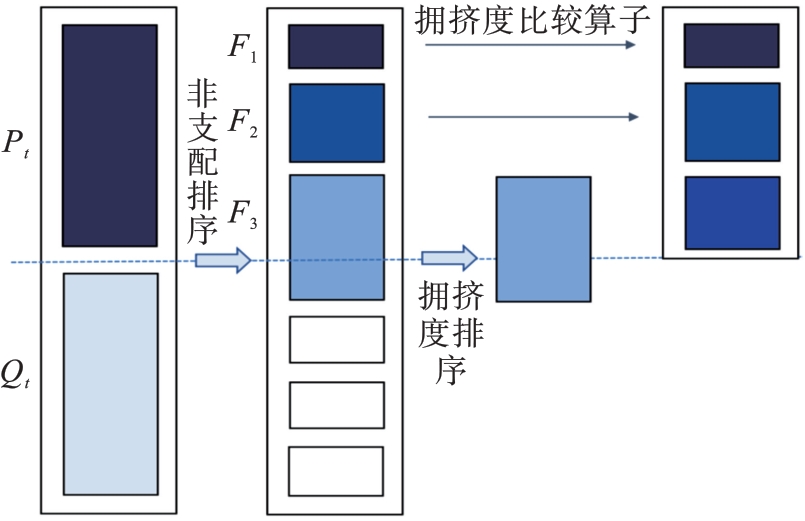
图1 传统的精英保留策略规则
Fig.1 Traditional elite retention strategy rules
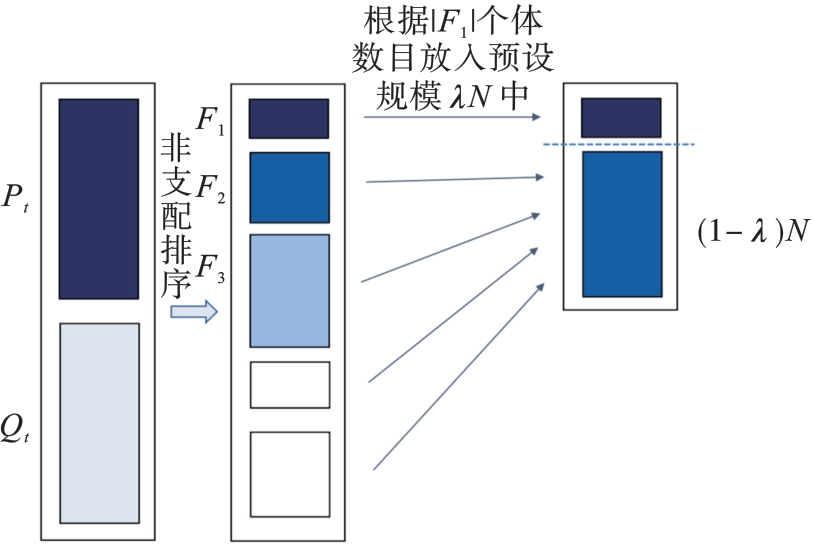
图2 自适应精英保留策略规则
Fig.2 Adaptive elite retention strategy rules
| 货主编号 | 货源地经度/(°) | 货源地纬度/(°) | 目的地经度/(°) | 目的地纬度/(°) | 要求送达 时间/h | 货物质量/t |
|---|---|---|---|---|---|---|
| 1 | 120.343 7 | 30.289 2 | 117.217 4 | 39.153 4 | 16 | 28 |
| 2 | 120.959 4 | 30.051 9 | 117.017 2 | 39.132 1 | 35 | 25 |
| 3 | 120.278 4 | 30.416 5 | 116.157 2 | 39.750 1 | 22 | 10 |
| … | … | … | … | … | … | … |
表 2 货主信息
Table 2 Consignor information
| 货主编号 | 货源地经度/(°) | 货源地纬度/(°) | 目的地经度/(°) | 目的地纬度/(°) | 要求送达 时间/h | 货物质量/t |
|---|---|---|---|---|---|---|
| 1 | 120.343 7 | 30.289 2 | 117.217 4 | 39.153 4 | 16 | 28 |
| 2 | 120.959 4 | 30.051 9 | 117.017 2 | 39.132 1 | 35 | 25 |
| 3 | 120.278 4 | 30.416 5 | 116.157 2 | 39.750 1 | 22 | 10 |
| … | … | … | … | … | … | … |
| 车型 | 最大载重/t | 车辆自重/t | 单位碳排放/(kg·km-1) | 起步价/元 | 单价/(元·km-1) |
|---|---|---|---|---|---|
| 1 | 8 | 6.5 | 0.040 | 470 | 4.5 |
| 2 | 13 | 8.8 | 0.045 | 600 | 6.0 |
| 3 | 18 | 13.5 | 0.050 | 750 | 6.5 |
| 4 | 25 | 16.0 | 0.055 | 900 | 7.5 |
| 5 | 30 | 18.0 | 0.060 | 1 200 | 8.0 |
表 3 车型信息
Table 3 Vehicle model information
| 车型 | 最大载重/t | 车辆自重/t | 单位碳排放/(kg·km-1) | 起步价/元 | 单价/(元·km-1) |
|---|---|---|---|---|---|
| 1 | 8 | 6.5 | 0.040 | 470 | 4.5 |
| 2 | 13 | 8.8 | 0.045 | 600 | 6.0 |
| 3 | 18 | 13.5 | 0.050 | 750 | 6.5 |
| 4 | 25 | 16.0 | 0.055 | 900 | 7.5 |
| 5 | 30 | 18.0 | 0.060 | 1 200 | 8.0 |
| 车主编号 | 车主经度/(°) | 车主纬度/(°) | 车型 |
|---|---|---|---|
| 1 | 120.257 6 | 30.227 5 | 2 |
| 2 | 119.886 9 | 29.179 0 | 5 |
| 3 | 120.259 4 | 30.096 7 | 4 |
| … | … | … | … |
表4 车主信息
Table 4 Car owner information
| 车主编号 | 车主经度/(°) | 车主纬度/(°) | 车型 |
|---|---|---|---|
| 1 | 120.257 6 | 30.227 5 | 2 |
| 2 | 119.886 9 | 29.179 0 | 5 |
| 3 | 120.259 4 | 30.096 7 | 4 |
| … | … | … | … |
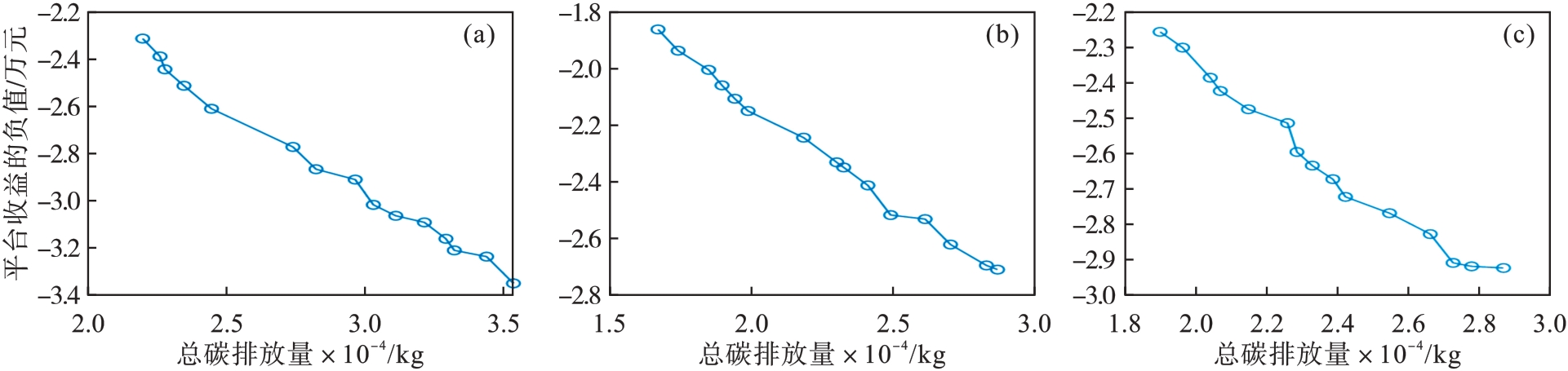
图3 3种车货供需比例的算例求解结果(a)—20货主与30车主; (b)—20货主与20车主; (c)—30货主与20车主.
Fig.3 Solution results of the supply-demand ratio for three types of vehicle-cargo matching examples
| 规模 | 算法 | t/s | ||||
|---|---|---|---|---|---|---|
10货主与 20车主 | NSPSO | 0.469 9 | 0.001 732 | 0.052 0 | 0.000 463 | 1.365 8 |
| AERS-MPSO | 0.337 9 | 0.001 645 | 0.035 9 | 0.000 427 | 1.475 0 | |
| ND-MPSO | 0.536 6 | 0.001 794 | 0.056 0 | 0.000 504 | 1.586 0 | |
| 改进后的NSGA-Ⅱ[ | 0.523 4 | 0.001 691 | 0.045 9 | 0.000 472 | 1.768 0 | |
| MOGWO | 0.525 7 | 0.001 758 | 0.053 8 | 0.000 562 | 1.948 0 | |
| AERSND-MPSO | 0.527 0 | 0.001 506 | 0.037 1 | 0.000 384 | 1.759 2 | |
30货主与 50车主 | NSPSO | 1.326 7 | 0.012 829 | 0.113 9 | 0.000 205 | 2.854 0 |
| AERS-MPSO | 1.312 2 | 0.011 830 | 0.088 3 | 0.000 194 | 2.879 0 | |
| ND-MPSO | 1.528 7 | 0.013 730 | 0.121 3 | 0.000 210 | 2.899 0 | |
| 改进后的NSGA-Ⅱ[ | 1.450 3 | 0 .009 435 | 0.106 6 | 0.000 190 | 3.780 0 | |
| MOGWO | 1.480 4 | 0.011 250 | 0.120 5 | 0.002 58 | 4.386 0 | |
| AERSND-MPSO | 1.524 5 | 0.008 220 | 0.098 2 | 0.000 183 | 3.682 4 | |
60货主与 100车主 | NSPSO | 1.821 8 | 0.008 236 | 0.109 0 | 0.000 268 | 4.684 0 |
| AERS-MPSO | 1.627 2 | 0.008 046 | 0.086 3 | 0.000 210 | 4.703 4 | |
| ND-MPSO | 2.578 4 | 0.007 945 | 0.114 6 | 0.000 238 | 4.824 5 | |
| 改进后的NSGA-Ⅱ[ | 2.035 0 | 0.007 682 | 0.098 6 | 0.000 184 | 5.895 3 | |
| MOGWO | 2.494 0 | 0.008 280 | 0.123 8 | 0.000 305 | 7.059 0 | |
| AERSND-MPSO | 2.567 0 | 0.006 370 | 0.086 6 | 0.000 140 | 5.273 0 |
表5 6种算法性能指标的对比
Table 5 Comparison of performance indicators for six algorithms
| 规模 | 算法 | t/s | ||||
|---|---|---|---|---|---|---|
10货主与 20车主 | NSPSO | 0.469 9 | 0.001 732 | 0.052 0 | 0.000 463 | 1.365 8 |
| AERS-MPSO | 0.337 9 | 0.001 645 | 0.035 9 | 0.000 427 | 1.475 0 | |
| ND-MPSO | 0.536 6 | 0.001 794 | 0.056 0 | 0.000 504 | 1.586 0 | |
| 改进后的NSGA-Ⅱ[ | 0.523 4 | 0.001 691 | 0.045 9 | 0.000 472 | 1.768 0 | |
| MOGWO | 0.525 7 | 0.001 758 | 0.053 8 | 0.000 562 | 1.948 0 | |
| AERSND-MPSO | 0.527 0 | 0.001 506 | 0.037 1 | 0.000 384 | 1.759 2 | |
30货主与 50车主 | NSPSO | 1.326 7 | 0.012 829 | 0.113 9 | 0.000 205 | 2.854 0 |
| AERS-MPSO | 1.312 2 | 0.011 830 | 0.088 3 | 0.000 194 | 2.879 0 | |
| ND-MPSO | 1.528 7 | 0.013 730 | 0.121 3 | 0.000 210 | 2.899 0 | |
| 改进后的NSGA-Ⅱ[ | 1.450 3 | 0 .009 435 | 0.106 6 | 0.000 190 | 3.780 0 | |
| MOGWO | 1.480 4 | 0.011 250 | 0.120 5 | 0.002 58 | 4.386 0 | |
| AERSND-MPSO | 1.524 5 | 0.008 220 | 0.098 2 | 0.000 183 | 3.682 4 | |
60货主与 100车主 | NSPSO | 1.821 8 | 0.008 236 | 0.109 0 | 0.000 268 | 4.684 0 |
| AERS-MPSO | 1.627 2 | 0.008 046 | 0.086 3 | 0.000 210 | 4.703 4 | |
| ND-MPSO | 2.578 4 | 0.007 945 | 0.114 6 | 0.000 238 | 4.824 5 | |
| 改进后的NSGA-Ⅱ[ | 2.035 0 | 0.007 682 | 0.098 6 | 0.000 184 | 5.895 3 | |
| MOGWO | 2.494 0 | 0.008 280 | 0.123 8 | 0.000 305 | 7.059 0 | |
| AERSND-MPSO | 2.567 0 | 0.006 370 | 0.086 6 | 0.000 140 | 5.273 0 |
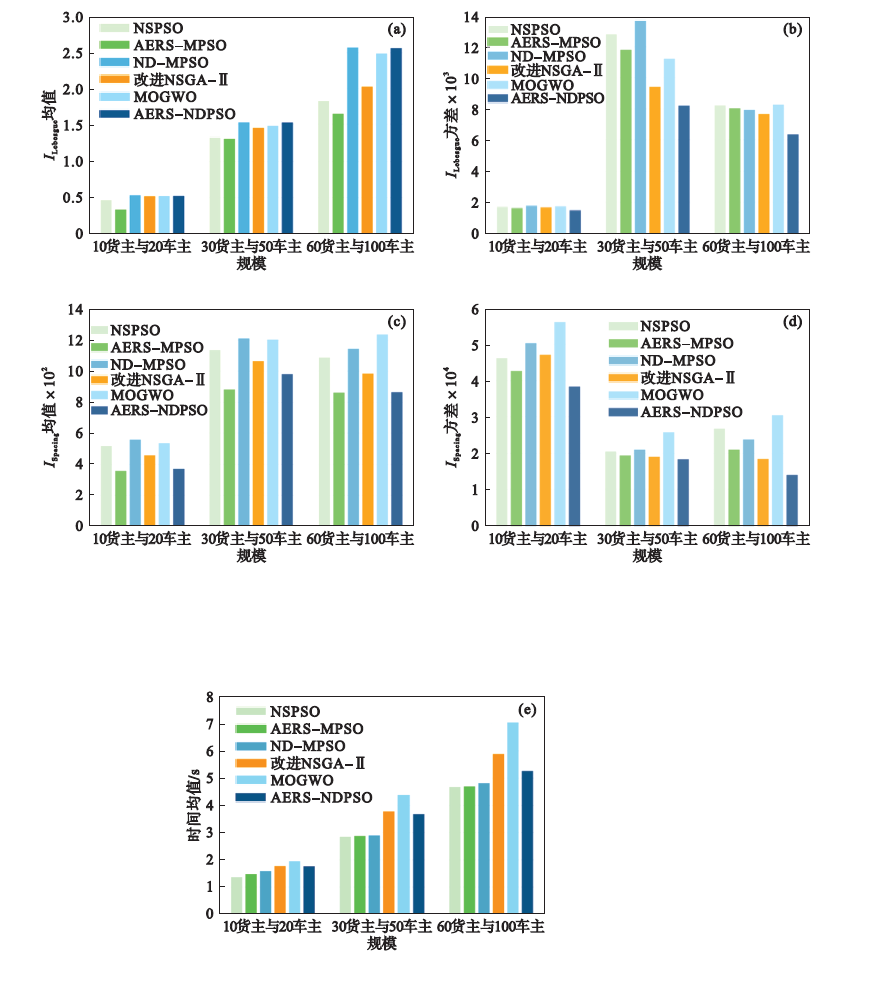
图4 6种算法在3种规模下不同性能指标的对比(a)—ILebesgue均值; (b)—ILebesgue方差; (c)—ISpacing均值; (d)—ISpacing方差; (e)—时间均值.
Fig.4 Comparison of performance indicators of six algorithms under three different scales
| 指标 | 算法 | p值 | ||
|---|---|---|---|---|
| 10货主与20车主 | 30货主与50车主 | 60货主与100车主 | ||
| Al0与AL1 | 0.008 | 0.001 | 0.000 | |
| Al0与AL2 | 0.851 | 0.111 | 0.000 | |
| Al0与AL3 | 0.946 | 0.356 | 0.073 | |
| Al0与AL1 | 0.133 | 0.022 | 0.003 | |
| Al0与 AL2 | 0.368 | 0.186 | 0.049 | |
| Al0与AL3 | 0.114 | 0.004 | 0.000 | |
表6 AERSND-MPSO算法与其他算法在不同规模问题上所获得的p值的显著性检验 (of different scales)
Table 6 Significance test of p-values obtained by AERSND-MPSO algorithm and other algorithms on problems
| 指标 | 算法 | p值 | ||
|---|---|---|---|---|
| 10货主与20车主 | 30货主与50车主 | 60货主与100车主 | ||
| Al0与AL1 | 0.008 | 0.001 | 0.000 | |
| Al0与AL2 | 0.851 | 0.111 | 0.000 | |
| Al0与AL3 | 0.946 | 0.356 | 0.073 | |
| Al0与AL1 | 0.133 | 0.022 | 0.003 | |
| Al0与 AL2 | 0.368 | 0.186 | 0.049 | |
| Al0与AL3 | 0.114 | 0.004 | 0.000 | |
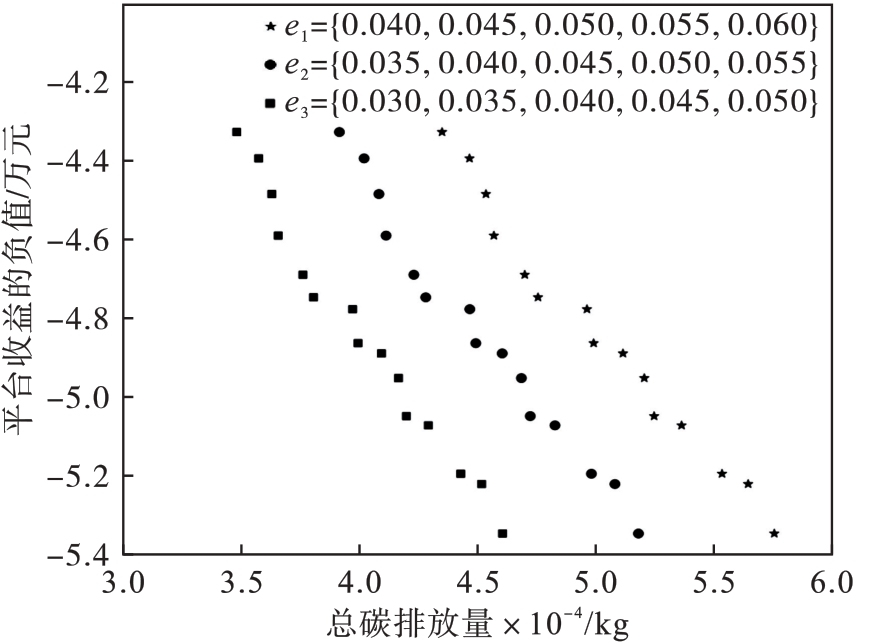
图5 改变ei对总碳排放量的影响
Fig.5 Impact of ei change on total carbon emissions
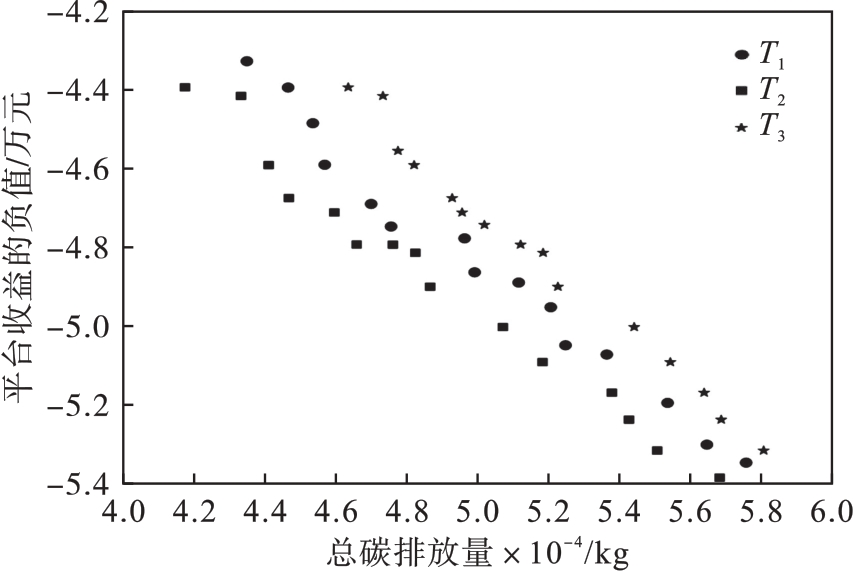
图6 改变Tj 对总碳排放量的影响
Fig.6 Impact of Tj change on total carbon emissions
| 横坐标范围×10-4/kg | 1.406 2 | 1.506 8 | 1.170 8 |
表 7 图6中3条曲线跨越的横坐标的范围 (curves in Fig. 6)
Table 7 Range of abscissas spanned by three
| 横坐标范围×10-4/kg | 1.406 2 | 1.506 8 | 1.170 8 |
| [1] | 交通运输部. 2022年交通运输行业发展统计公报[EB/OL].(2023-06-21)[2023-09-10].. |
| Ministry of Transport. Statistical bulletin on the development of the transportation industry in 2022 [EB/OL].(2023-06-21 2023-09-10].) | |
| [2] | 胡觉亮,邴聪,韩曙光.基于TS算法的公路干线货运平台车货匹配研究[J].浙江理工大学学报(社会科学版),2018,40(5):478-486. |
| Hu Jue-liang, Bing Cong, Han Shu-guang. Study on vehicles and goods matching of arterial road freight platform based on TS algorithm[J]. Journal of Zhejiang Sci-Tech University (Social Sciences), 2018, 40(5): 478-486. | |
| [3] | Wang H F, Huang M, Kuang H B. One-to-one stable vehicle cargo matching in the fourth party logistics[C]//2021 33rd Chinese Control and Decision Conference (CCDC). Kunming, 2021: 4221-4226. |
| [4] | Sun Y D, Zhang J, Tang Q Y, et al. Research on benefit-risk of vehicle-cargo matching platform based on matching degree[C]//2020 IEEE 5th International Conference on Intelligent Transportation Engineering (ICITE). Beijing, 2020: 580-584. |
| [5] | Ling H F, Fu Y, Hua M, et al. An adaptive parameter controlled ant colony optimization approach for peer-to-peer vehicle and cargo matching[J]. IEEE Access, 2021, 9: 15764-15777. |
| [6] | Kong L, Huang M. Stable truckload matching in the vehicle-cargo matching platform[C]//2024 36th Chinese Control and Decision Conference (CCDC). Xi’an, 2024: 5817-5821. |
| [7] | Deng J X, Zhang H P, Wei S F. Prediction of vehicle-cargo matching probability based on dynamic Bayesian network[J]. International Journal of Production Research, 2021, 59(17): 5164-5178. |
| [8] | Huang Y X, Zhao L, Van Woensel T, et al. Time-dependent vehicle routing problem with path flexibility[J]. Transportation Research Part B: Methodological, 2017, 95: 169-195. |
| [9] | Elgharably N, Easa S, Nassef A, et al. Stochastic multi-objective vehicle routing model in green environment with customer satisfaction[J]. IEEE Transactions on Intelligent Transportation Systems, 2022, 24(1): 1337-1355. |
| [10] | Yu Y, Tang J F, Li J, et al. Reducing carbon emission of pickup and delivery using integrated scheduling[J]. Transportation Research Part D: Transport and Environment, 2016, 47: 237-250. |
| [11] | 周鲜成,吕阳,贺彩虹,等.考虑时变速度的多车场绿色车辆路径模型及优化算法[J].控制与决策,2022,37(2):473-482. |
| Zhou Xian-cheng, Yang Lyu, He Cai-hong, et al. Multi-depot green vehicle routing model and its optimization algorithm with time-varying speed[J]. Control and Decision, 2022, 37(2): 473-482. | |
| [12] | Bektas T, Laporte G. The pollution-routing problem[J]. Transportation Research Part B: Methodological, 2011, 45(8):1232-1250. |
| [13] | Deb K, Agrawal S, Pratap A, et al. A fast elitist non-dominated sorting genetic algorithm for multi-objective optimization: NSGA-II[C]// International Conference on Parallel Solving from Nature. Paris, 2000: 849-858. |
| [14] | Liu Q, Li X F, Liu H T, et al. Multi-objective metaheuristics for discrete optimization problems: a review of the state-of-the-art[J]. Applied Soft Computing, 2020, 93: 106382. |
| [15] | 倪少权,罗轩,肖斌.考虑三方利益的车货匹配优化[J].西南交通大学学报,2023,58(1):48-57. |
| Ni Shao-quan, Luo Xuan, Xiao Bin. Optimization of vehicle-cargo matching regarding interests of three parties[J]. Journal of Southwest Jiaotong University, 2023, 58(1): 48-57. | |
| [16] | Ala A, Goli A, Mirjalili S, et al. A fuzzy multi-objective optimization model for sustainable healthcare supply chain network design[J]. Applied Soft Computing, 2024, 150: 111012. |
| [1] | 朱珠, 娄航宇. 多目标投资组合优化问题的学习型NSGA-II[J]. 东北大学学报(自然科学版), 2025, 46(9): 17-24. |
| [2] | 曹知奥, 马晨硕. 基于改进多目标混沌粒子群优化的电动汽车充放电调度[J]. 东北大学学报(自然科学版), 2025, 46(9): 1-8. |
| [3] | 王述红, 李皓然, 尹宏, 贡藩. 基于响应面分析的纤维泡沫混凝土多目标优化[J]. 东北大学学报(自然科学版), 2025, 46(6): 122-130. |
| [4] | 吴杨俊, 李振平, 姚红良, 韩圣东. 考虑辅助部件的车辆动力总成系统建模方法与优化设计[J]. 东北大学学报(自然科学版), 2025, 46(4): 43-51. |
| [5] | 蒋启龙, 许健. 改进PSO-PH-RRT*算法在智能车路径规划中的应用[J]. 东北大学学报(自然科学版), 2025, 46(3): 12-19. |
| [6] | 李登辉, 赵岩, 雷洪, 范佳. RH终点钢液碳质量分数的智能预测[J]. 东北大学学报(自然科学版), 2025, 46(10): 51-58. |
| [7] | 房立金, 高跃, 曹新星, 巩云鹏. 基于NSGA-II的串联机器人几何参数公差的多目标优化分配[J]. 东北大学学报(自然科学版), 2024, 45(6): 829-836. |
| [8] | 康岩松, 臧顺来. 基于多种策略的改进粒子群优化算法[J]. 东北大学学报(自然科学版), 2023, 44(8): 1089-1097. |
| [9] | 刘晓熙, 姜慧研, 骆敏. 面向肝癌消融术的多约束最优穿刺路径规划算法[J]. 东北大学学报(自然科学版), 2023, 44(7): 922-930. |
| [10] | 李占山, 宋志扬, 花昀峤. 一种基于自适应搜索的多模态多目标优化算法[J]. 东北大学学报(自然科学版), 2023, 44(10): 1408-1415. |
| [11] | 张瑞友, 王超慧, 陈勇强. 基于控制思想求解非线性规划问题的李雅普诺夫方法[J]. 东北大学学报(自然科学版), 2021, 42(9): 1217-1226. |
| [12] | 马廉洁, 左宇辰, 周云光, 付海玲. 氧化锆陶瓷车削刀具几何参数的多目标优化[J]. 东北大学学报:自然科学版, 2020, 41(8): 1129-1134. |
| [13] | 齐锡晶, 唐梁, 康伟鑫, 秦娇娇. 高速公路桥梁桥面板养护方案多目标决策方法[J]. 东北大学学报:自然科学版, 2020, 41(7): 1033-1040. |
| [14] | 田慧欣, 王帝, 帅民伟, 李坤. 面向OD客流的高速列车开行方案的优化[J]. 东北大学学报:自然科学版, 2020, 41(11): 1535-1542. |
| [15] | 李夔宁, 张宏济, 谢翌, 傅春耘. 基于电-热-老化耦合模型的自适应多段恒流充电研究[J]. 东北大学学报:自然科学版, 2019, 40(9): 1323-1329. |
| 阅读次数 | ||||||
|
全文 |
|
|||||
|
摘要 |
|
|||||
