
Journal of Northeastern University(Natural Science) ›› 2026, Vol. 47 ›› Issue (1): 20-30.DOI: 10.12068/j.issn.1005-3026.2026.20250103
• Smart Healthcare Column • Previous Articles Next Articles
Jin-zhu YANG1,2,3( ), Mei WEI1,2,3, Qi YU1,2,3, Song SUN1,2,3
Received:2025-06-07
Online:2026-01-15
Published:2026-03-17
Contact:
Jin-zhu YANG
CLC Number:
Jin-zhu YANG, Mei WEI, Qi YU, Song SUN. Application of Mean Teacher Method in Semi-supervised Medical Image Segmentation[J]. Journal of Northeastern University(Natural Science), 2026, 47(1): 20-30.
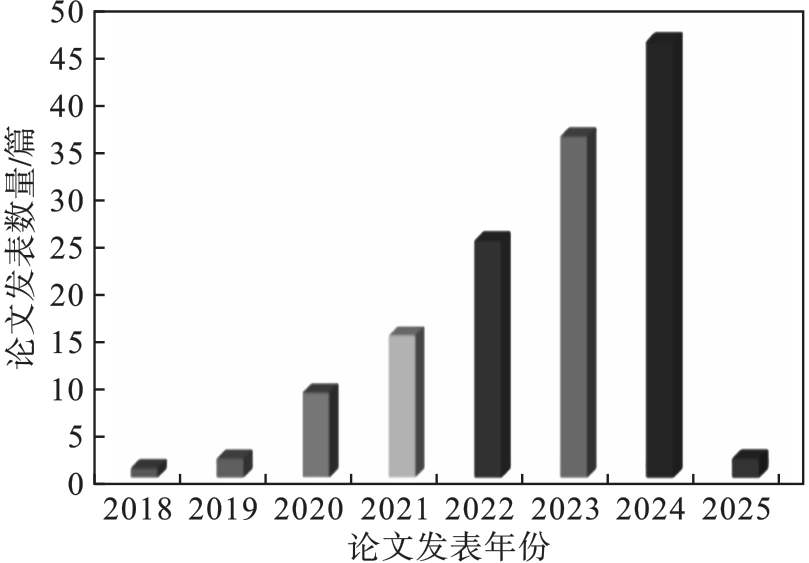
Fig.1 Annual publication trend of papers related to MT improvements from 2018 to February 2025
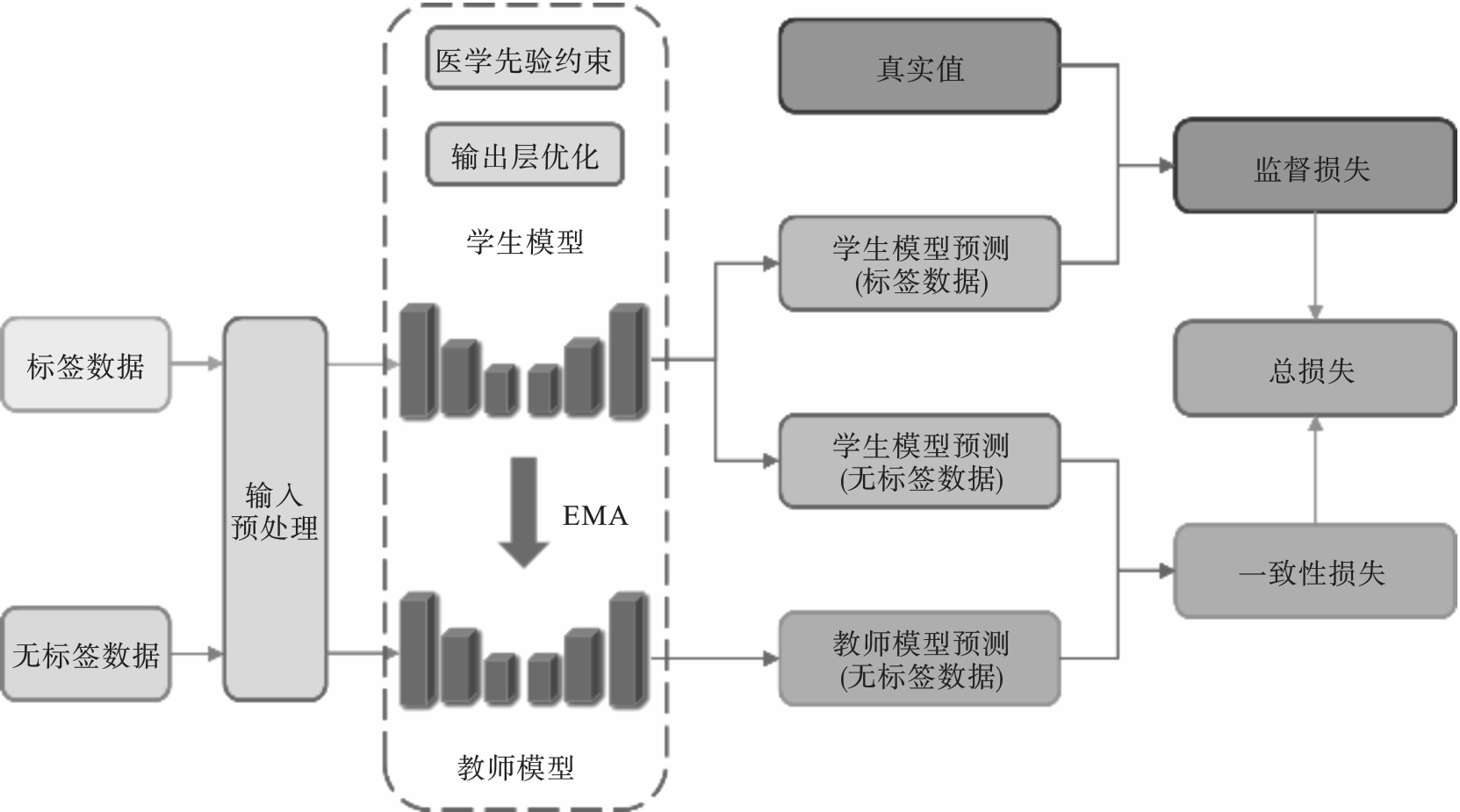
Fig.2 Flowchart of MT method
| 方法名称 | 主要内容及优势 |
|---|---|
| UA-MT[ | 通过不确定性感知机制提高分割性能的3D磁共振左心房分割方法 |
| DTC[ | 基于双任务一致性的分割框架,引入任务级正则化和几何约束,通过联合预测像素级分割图和基于几何的水平集表示来降低计算成本 |
| SASSNet[ | 基于形状感知的3D语义分割方法,设计同时预测语义分割图和符号距离图的多任务深度网络,充分利用像素级信息,结合几何形状约束,提升网络捕捉复杂形状的能力 |
| URPC [ | 用于鼻咽癌实体肿瘤靶区的分割框架,通过多尺度金字塔预测网络和不确定性校正模块,充分利用无标签数据中的丰富信息,降低对标签数据的需求 |
| CPS[ | 交叉伪标签监督的语义分割方法,在2个具有相同结构但不同初始化的分割网络之间施加一致性约束,利用伪标签相互监督,提高模型对无标签数据的利用效率 |
| ICT[ | 插值一致性算法,通过在无标签数据的插值上施加一致性约束,推动决策边界向低密度区域移动,减少过拟合并提高泛化能力 |
| MC-Net [ | 相互一致性左心房分割框架,通过强调无标签数据中的小分支或模糊边缘等挑战性区域,结合不确定性估计和循环伪标签方案实现相互一致性训练 |
| CCT[ | 交叉一致性训练语义分割方法.通过在编码器的输出上施加不同扰动,并强制主解码器与辅助解码器之间的预测一致性,增强模型对无标签数据的学习能力 |
| DAN[ | 设计分割网络和评估网络形成对抗训练机制,设置超参数优化模型权重,加快收敛速度 |
| SS-Net[ | 结合像素级平滑和类别间分离,提升模型对抗扰动输出一致性和模糊区域特征提取能力 |
| BCP[ | 通过双向复制粘贴操作混合标签和无标签图像来增强模型对无标签数据的分割能力 |
Table 1 Commonly used comparative experimental methods used in medical image segmentation papers based
| 方法名称 | 主要内容及优势 |
|---|---|
| UA-MT[ | 通过不确定性感知机制提高分割性能的3D磁共振左心房分割方法 |
| DTC[ | 基于双任务一致性的分割框架,引入任务级正则化和几何约束,通过联合预测像素级分割图和基于几何的水平集表示来降低计算成本 |
| SASSNet[ | 基于形状感知的3D语义分割方法,设计同时预测语义分割图和符号距离图的多任务深度网络,充分利用像素级信息,结合几何形状约束,提升网络捕捉复杂形状的能力 |
| URPC [ | 用于鼻咽癌实体肿瘤靶区的分割框架,通过多尺度金字塔预测网络和不确定性校正模块,充分利用无标签数据中的丰富信息,降低对标签数据的需求 |
| CPS[ | 交叉伪标签监督的语义分割方法,在2个具有相同结构但不同初始化的分割网络之间施加一致性约束,利用伪标签相互监督,提高模型对无标签数据的利用效率 |
| ICT[ | 插值一致性算法,通过在无标签数据的插值上施加一致性约束,推动决策边界向低密度区域移动,减少过拟合并提高泛化能力 |
| MC-Net [ | 相互一致性左心房分割框架,通过强调无标签数据中的小分支或模糊边缘等挑战性区域,结合不确定性估计和循环伪标签方案实现相互一致性训练 |
| CCT[ | 交叉一致性训练语义分割方法.通过在编码器的输出上施加不同扰动,并强制主解码器与辅助解码器之间的预测一致性,增强模型对无标签数据的学习能力 |
| DAN[ | 设计分割网络和评估网络形成对抗训练机制,设置超参数优化模型权重,加快收敛速度 |
| SS-Net[ | 结合像素级平滑和类别间分离,提升模型对抗扰动输出一致性和模糊区域特征提取能力 |
| BCP[ | 通过双向复制粘贴操作混合标签和无标签图像来增强模型对无标签数据的分割能力 |
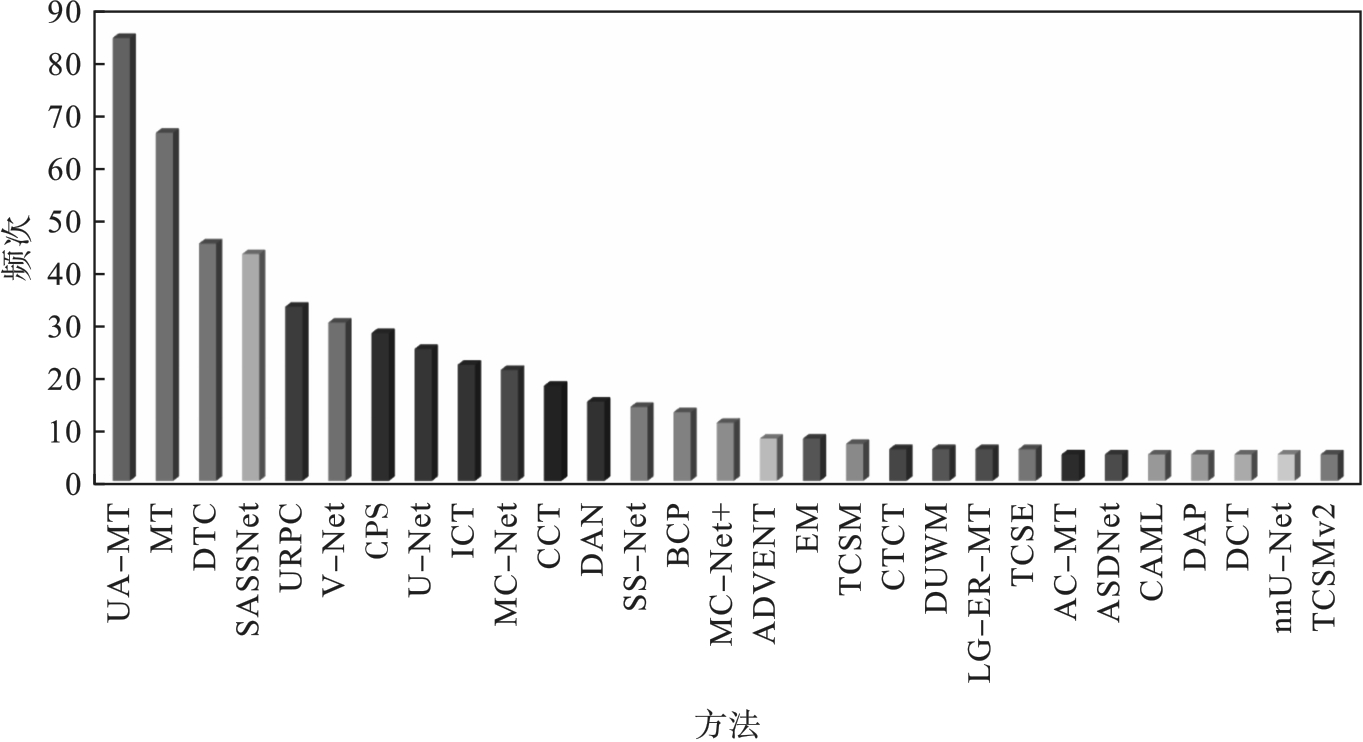
Fig.3 Common comparison methods and their frequencies
| 方法名称 | 评价指标 | 标签数据数量 | ||||
|---|---|---|---|---|---|---|
| Dice/% | Jaccard/% | ASD | 95HD | labeled | unlabeled | |
| MT[ | 88.23 | 79.29 | 2.73 | 10.64 | 16 | 64 |
| UA-MT[ | 88.88 | 80.21 | 2.26 | 7.32 | 16 | 64 |
| 87.79 | 78.39 | 2.12 | 8.68 | 8 | 72 | |
| DTC[ | 89.42 | 80.98 | 2.10 | 7.32 | 16 | 64 |
| 87.51 | 78.17 | 2.36 | 8.23 | 8 | 72 | |
| SASSNet[ | 89.27 | 80.82 | 3.13 | 8.83 | 16 | 64 |
| 87.54 | 78.05 | 2.59 | 9.84 | 8 | 72 | |
| URPC[ | 86.92 | 77.03 | 2.28 | 11.13 | 8 | 72 |
| MC-Net[ | 90.34 | 82.48 | 1.77 | 6.00 | 16 | 64 |
| 87.62 | 78.25 | 1.82 | 10.03 | 8 | 72 | |
| CCT[ | 88.83 | 80.06 | 2.49 | 8.44 | 16 | 64 |
| DAN[ | 87.52 | 78.29 | 2.42 | 9.01 | 16 | 64 |
| SS-Net[ | 88.55 | 79.62 | 1.90 | 7.49 | 8 | 72 |
| BCP[ | 89.62 | 81.31 | 1.76 | 6.81 | 8 | 72 |
Table 2 Performance evaluation of common semi-supervised methods on 2018 Left Atrium Segmentation
| 方法名称 | 评价指标 | 标签数据数量 | ||||
|---|---|---|---|---|---|---|
| Dice/% | Jaccard/% | ASD | 95HD | labeled | unlabeled | |
| MT[ | 88.23 | 79.29 | 2.73 | 10.64 | 16 | 64 |
| UA-MT[ | 88.88 | 80.21 | 2.26 | 7.32 | 16 | 64 |
| 87.79 | 78.39 | 2.12 | 8.68 | 8 | 72 | |
| DTC[ | 89.42 | 80.98 | 2.10 | 7.32 | 16 | 64 |
| 87.51 | 78.17 | 2.36 | 8.23 | 8 | 72 | |
| SASSNet[ | 89.27 | 80.82 | 3.13 | 8.83 | 16 | 64 |
| 87.54 | 78.05 | 2.59 | 9.84 | 8 | 72 | |
| URPC[ | 86.92 | 77.03 | 2.28 | 11.13 | 8 | 72 |
| MC-Net[ | 90.34 | 82.48 | 1.77 | 6.00 | 16 | 64 |
| 87.62 | 78.25 | 1.82 | 10.03 | 8 | 72 | |
| CCT[ | 88.83 | 80.06 | 2.49 | 8.44 | 16 | 64 |
| DAN[ | 87.52 | 78.29 | 2.42 | 9.01 | 16 | 64 |
| SS-Net[ | 88.55 | 79.62 | 1.90 | 7.49 | 8 | 72 |
| BCP[ | 89.62 | 81.31 | 1.76 | 6.81 | 8 | 72 |
| 数据集名称 | 器官 | 模态 | 规模/张 | 数据集描述 |
|---|---|---|---|---|
Spinal Cord Grey Matter Segmentation Challenge | 脊髓 | MRI | 80 | 脊髓T2加权MRI,用于脊柱椎体分割 http://cmictig.cs.ucl.ac.uk/niftyweb/ |
| 2018 Left Atrium Segmentation Challenge | 心脏 | MRI | 154 | 3D LGE-MRI完整心房扫描图像 https://www.cardiacatlas.org/atriaseg2018-challenge/ atria-seg-data/ |
Automatic Cardiac Diagnosis Challenge (ACDC) | 150 | 心脏图像及左、右心室和心肌的标签 http://acdc.creatis.insa-lyon.fr/ | ||
| MM-WHS 2017 | MRI,CT | 120 | 用于多模态全心分割 https://zmiclab.github.io/zxh/0/mmwhs/ | |
| CAMELYON16 | 细胞 | WSI | 400 | 用于乳腺癌淋巴结转移检测和病理分析 https://camelyon16.grand-challenge.org/ |
| MoNuSeg | 44 | 用于细胞核分割和病理图像分析 https://monuseg.grand-challenge.org/ | ||
| CRAG | 213 | 用于结直肠腺癌腺体和息肉分割 https://kddcup24.github.io/ | ||
| DSB2018 | 1 039 | 用于细胞核分割 https://www.kaggle.com/c/data-science-bowl-2018/data |
Table 3 Lists of common medical image segmentation datasets
| 数据集名称 | 器官 | 模态 | 规模/张 | 数据集描述 |
|---|---|---|---|---|
Spinal Cord Grey Matter Segmentation Challenge | 脊髓 | MRI | 80 | 脊髓T2加权MRI,用于脊柱椎体分割 http://cmictig.cs.ucl.ac.uk/niftyweb/ |
| 2018 Left Atrium Segmentation Challenge | 心脏 | MRI | 154 | 3D LGE-MRI完整心房扫描图像 https://www.cardiacatlas.org/atriaseg2018-challenge/ atria-seg-data/ |
Automatic Cardiac Diagnosis Challenge (ACDC) | 150 | 心脏图像及左、右心室和心肌的标签 http://acdc.creatis.insa-lyon.fr/ | ||
| MM-WHS 2017 | MRI,CT | 120 | 用于多模态全心分割 https://zmiclab.github.io/zxh/0/mmwhs/ | |
| CAMELYON16 | 细胞 | WSI | 400 | 用于乳腺癌淋巴结转移检测和病理分析 https://camelyon16.grand-challenge.org/ |
| MoNuSeg | 44 | 用于细胞核分割和病理图像分析 https://monuseg.grand-challenge.org/ | ||
| CRAG | 213 | 用于结直肠腺癌腺体和息肉分割 https://kddcup24.github.io/ | ||
| DSB2018 | 1 039 | 用于细胞核分割 https://www.kaggle.com/c/data-science-bowl-2018/data |
| 性能评价指标 | 定义 | 计算公式 | 取值范围 | 取值含义 |
|---|---|---|---|---|
| Dice | 预测结果与真实值间的相似度 | [0,1] | 数值越大表明分割效果越好 | |
| Jaccard | 预测结果与真实值间的交并比 | |||
准确率 (Accuracy) | 分割结果预测正确的像素比例 | |||
召回率 (Recall) | 正类真实值样本正确预测比例 | |||
特异性 (Specificity) | 负类真实值样本正确预测比例 | |||
体积相似度 (VS) | 分割结果与真实值体积相似度 | |||
| Hausdorff距离 | 预测结果与真实值边界匹配程度 | [0, | 数值越小表明分割效果越好 | |
| ASD | 预测结果与真实值平均表面距离 |
Table 4 Lists of common performance metrics for medical image segmentation
| 性能评价指标 | 定义 | 计算公式 | 取值范围 | 取值含义 |
|---|---|---|---|---|
| Dice | 预测结果与真实值间的相似度 | [0,1] | 数值越大表明分割效果越好 | |
| Jaccard | 预测结果与真实值间的交并比 | |||
准确率 (Accuracy) | 分割结果预测正确的像素比例 | |||
召回率 (Recall) | 正类真实值样本正确预测比例 | |||
特异性 (Specificity) | 负类真实值样本正确预测比例 | |||
体积相似度 (VS) | 分割结果与真实值体积相似度 | |||
| Hausdorff距离 | 预测结果与真实值边界匹配程度 | [0, | 数值越小表明分割效果越好 | |
| ASD | 预测结果与真实值平均表面距离 |
| [1] | Ronneberger O, Fischer P, Brox T. U-Net: convolutional networks for biomedical image segmentation[C]//Medical Image Computing and Computer Assisted Intervention—MICCAI 2015. Cham: Springer, 2015: 234-241. |
| [2] | Long J, Shelhamer E, Darrell T. Fully convolutional networks for semantic segmentation[C]//IEEE Conference on Computer Vision and Pattern Recognition (CVPR). Boston: IEEE, 2015: 3431-3440. |
| [3] | Vaswani A, Shazeer N, Parmar N, et al. Attention is all you need[J]. Advances in Neural Information Processing Systems, 2017, 30: 5998-6008. |
| [4] | Laine S, Aila T. Temporal ensembling for semi-supervised learning[EB/OL]. (2016-10-07)[2024-05-27].. |
| [5] | Tarvainen A, Valpola H. Mean teachers are better role models: weight-averaged consistency targets improve semi-supervised deep learning results[J]. Advances in Neural Information Processing Systems, 2017, 30: 1195-1204. |
| [6] | Miyato T, Maeda S I, Koyama M, et al. Virtual adversarial training: a regularization method for supervised and semi-supervised learning[J]. IEEE Transactions on Pattern Analysis and Machine Intelligence, 2019, 41(8): 1979-1993. |
| [7] | Verma V, Kawaguchi K, Lamb A, et al. Interpolation consistency training for semi-supervised learning[J]. Neural Networks, 2022, 145: 90-106. |
| [8] | Fu Y G, Robu M R, Koo B, et al. More unlabelled data or label more data? a study on semi-supervised laparoscopic image segmentation[C]//Domain Adaptation and Representation Transfer and Medical Image Learning with Less Labels and Imperfect Data. Cham: Springer, 2019: 173-180. |
| [9] | Zhou Y N, Chen H, Lin H J, et al. Deep semi-supervised knowledge distillation for overlapping cervical cell instance segmentation[C]//Medical Image Computing and Computer Assisted Intervention—MICCAI 2020. Cham: Springer, 2020: 521-531. |
| [10] | Wang G T, Liu X L, Li C P, et al. A noise-robust framework for automatic segmentation of COVID-19 pneumonia lesions from CT images[J]. IEEE Transactions on Medical Imaging, 2020, 39(8): 2653-2663. |
| [11] | Xu X A, Sanford T, Turkbey B, et al. Shadow-consistent semi-supervised learning for prostate ultrasound segmentation[J]. IEEE Transactions on Medical Imaging, 2022, 41(6): 1331-1345. |
| [12] | Yang Y L, Song H, Lin Y C, et al. PrixMatch: semi-supervised network for multi-modal medical image segmentation with cross-modal data augmentation and adaptive prior knowledge thresholding[C]//IEEE International Conference on Bioinformatics and Biomedicine (BIBM). Lisbon: IEEE, 2024: 2766-2771. |
| [13] | Cai C Y, He J J, Zhang M L, et al. Patch shuffle and pixel contrast: dual consistency learning for semi-supervised lung tumor segmentation[C]// Pattern Recognition and Computer Vision. Singapore: Springer, 2024: 504-516. |
| [14] | He A L, Li T, Wu Y L, et al. FRCNet: frequency and region consistency for semi-supervised medical image segmentation[C]// Medical Image Computing and Computer Assisted Intervention—MICCAI 2024. Cham: Springer, 2024: 305-315. |
| [15] | Zhao Z Y, Xu K X, Yeo H Z, et al. MS-MT: multi-scale mean teacher with contrastive unpaired translation for cross-modality vestibular schwannoma and cochlea segmentation[C]// Brainlesion: Glioma, Multiple Sclerosis, Stroke and Traumatic Brain Injuries. Cham: Springer, 2023: 68-78. |
| [16] | Aralikatti R C, Pawan S J, Rajan J. A dual-stage semi-supervised pre-training approach for medical image segmentation[J]. IEEE Transactions on Artificial Intelligence, 2024, 5(2): 556-565. |
| [17] | Xu Z, Wang Y X, Lu D H, et al. Ambiguity-selective consistency regularization for mean-teacher semi-supervised medical image segmentation[J]. Medical Image Analysis, 2023, 88: 102880. |
| [18] | Wang Y X, Zhang Y, Tian J, et al. Double-uncertainty weighted method for semi-supervised learning[C]//Medical Image Computing and Computer Assisted Intervention—MICCAI 2020. Cham: Springer, 2020: 542-551. |
| [19] | Zhang Y C, Jiao R S, Liao Q C, et al. Uncertainty-guided mutual consistency learning for semi-supervised medical image segmentation[J]. Artificial Intelligence in Medicine, 2023, 138: 102476. |
| [20] | Hang W L, Feng W, Liang S, et al. Local and global structure-aware entropy regularized mean teacher model for 3D left atrium segmentation[C]//Medical Image Computing and Computer Assisted Intervention—MICCAI 2020. Cham: Springer, 2020: 562-571. |
| [21] | Gao H M, Wang H Y, Chen L X, et al. Semi-supervised segmentation of hyperspectral pathological imagery based on shape priors and contrastive learning[J]. Biomedical Signal Processing and Control, 2024, 91: 105881. |
| [22] | Yang X, Li H M, Wang Y, et al. Contrastive rendering with semi-supervised learning for ovary and follicle segmentation from 3D ultrasound[J]. Medical Image Analysis, 2021, 73: 102134. |
| [23] | Jin Q G, Cui H, Sun C M, et al. Inter- and intra-uncertainty based feature aggregation model for semi-supervised histopathology image segmentation[J]. Expert Systems with Applications, 2024, 238: 122093. |
| [24] | Yu L Q, Wang S J, Li X M, et al. Uncertainty-aware self-ensembling model for semi-supervised 3D left atrium segmentation[C]//Medical Image Computing and Computer Assisted Intervention—MICCAI 2019. Cham: Springer, 2019: 605-613. |
| [25] | Xiang J Y, Qiu P, Yang Y. FUSSNet: fusing two sources of uncertainty for semi-supervised medical image segmentation[C]//Medical Image Computing and Computer Assisted Intervention—MICCAI 2022. Cham: Springer, 2022: 481-491. |
| [26] | Guo X R, Sun K, Zheng Y J. Multi-scale consistency adversarial learning for semi-supervised 3D medical image segmentation[J]. Biomedical Signal Processing and Control, 2025, 103: 107475. |
| [27] | Wu Y C, Li X Q, Zhou Y. Uncertainty-aware representation calibration for semi-supervised medical imaging segmentation[J]. Neurocomputing, 2024, 595: 127912. |
| [28] | Hu L, Li J X, Peng X C, et al. Semi-supervised NPC segmentation with uncertainty and attention guided consistency[J]. Knowledge-Based Systems, 2022, 239: 108021. |
| [29] | Zhou Q, Feng Y W, Huang Z W, et al. Specific instance and cross-prompt-based robust 3-D semi-supervised medical image segmentation[J]. IEEE Transactions on Instrumentation and Measurement, 2024, 73: 4009414. |
| [30] | Meng H, Zhao H C, Yu Z N, et al. Uncertainty-aware mean teacher framework with inception and squeeze-and-excitation block for MICCAI FLARE22 challenge[C]//Fast and Low-Resource Semi-supervised Abdominal Organ Segmentation. Cham: Springer, 2022: 245-259. |
| [31] | Xu A, Wang S Y, Fan J Y, et al. Dual attention based uncertainty-aware mean teacher model for semi-supervised cardiac image segmentation[C]// IEEE International Conference on Progress in Informatics and Computing (PIC). Shanghai: IEEE, 2021: 82-86. |
| [32] | Farooq M U, Ullah Z, Gwak J. Residual attention based uncertainty-guided mean teacher model for semi-supervised breast masses segmentation in 2D ultrasonography[J]. Computerized Medical Imaging and Graphics, 2023, 104: 102173. |
| [33] | Lei T, Zhang D, Du X G, et al. Semi-supervised medical image segmentation using adversarial consistency learning and dynamic convolution network[J]. IEEE Transactions on Medical Imaging, 2023, 42(5): 1265-1277. |
| [34] | Wang K P, Zhan B, Zu C, et al. Semi-supervised medical image segmentation via a tripled-uncertainty guided mean teacher model with contrastive learning[J]. Medical Image Analysis, 2022, 79: 102447. |
| [35] | Lyu J, Sui B, Wang C Y, et al. Adaptive feature aggregation based multi-task learning for uncertainty-guided semi-supervised medical image segmentation[J]. Expert Systems with Applications, 2023, 232: 120836. |
| [36] | Cheng H T, Yeh C F, Kuo P C, et al. Self-similarity student for partial label histopathology image segmentation[C]//Computer Vision—ECCV 2020. Cham: Springer, 2020: 117-132. |
| [37] | Huang H B, Cui Y, Shi M X, et al. Semi-supervised cerebrovascular segmentation using TOF-MRA images based on label refinement and consistency regularization[C]//2024 IEEE International Symposium on Biomedical Imaging (ISBI). Piscataway: IEEE,2024: 1-5. |
| [38] | Qiu Y, Lu H T, Mei J, et al. Towards semi-supervised multi-modal rectal cancer segmentation: a large-scale dataset and a multi-teacher uncertainty-aware network[J]. Expert Systems with Applications, 2024, 255: 124734. |
| [39] | Zou J G, Wang Z H, Du X Q. A double-teacher model capable of exploiting isomorphic and heterogeneous discrepancy information for medical image segmentation[J]. Diagnostics, 2023, 13(11): 1971. |
| [40] | Li B L, Wang Y, Xu Y M, et al. DSST: a dual student model guided student-teacher framework for semi-supervised medical image segmentation[J]. Biomedical Signal Processing and Control, 2024, 90: 105890. |
| [41] | Hu G, Zhao F, Houssein E H. Competitive dual-students using bi-level contrastive learning for semi-supervised medical image segmentation[J]. Engineering Applications of Artificial Intelligence, 2025, 144: 110082. |
| [42] | Li W, Bian R F, Zhao W Y, et al. Diversity matters: cross-head mutual mean-teaching for semi-supervised medical image segmentation[J]. Medical Image Analysis, 2024, 97: 103302. |
| [43] | Zhu J Y, Bolsterlee B, Chow B V Y, et al. Hybrid dual mean-teacher network with double-uncertainty guidance for semi-supervised segmentation of MRI scans[EB/OL]. (2023-03-09)[2024-05-11]. . |
| [44] | Zhou Q, Yu B, Xiao F, et al. Robust semi-supervised 3D medical image segmentation with diverse joint-task learning and decoupled inter-student learning[J]. IEEE Transactions on Medical Imaging, 2024, 43(6): 2317-2331. |
| [45] | Qiu Y T, Meng J, Li B H. Semi-supervised strong-teacher consistency learning for few-shot cardiac MRI image segmentation[J]. Computer Methods and Programs in Biomedicine, 2025, 261: 108613. |
| [46] | Li F X, Jiang A L, Li M Y, et al. HPFG: semi-supervised medical image segmentation framework based on hybrid pseudo-label and feature-guiding[J]. Medical & Biological Engineering & Computing, 2024, 62(2): 405-421. |
| [47] | Lin C, Liu Y Z, Wang D H, et al. S-ACMT: enhancing semi-supervised medical image segmentation with SAM as a cross-supervised secondary teacher[C]//2024 9th International Conference on Signal and Image Processing (ICSIP). Piscataway: IEEE, 2024: 774-779. |
| [48] | Mei C Y, Yang X G, Zhou M, et al. Semi-supervised image segmentation using a residual-driven mean teacher and an exponential Dice loss[J]. Artificial Intelligence in Medicine, 2024, 148: 102757. |
| [49] | Gao N, Zhou S P, Wang L, et al. PMT: progressive mean teacher via exploring temporal consistency for semi-supervised medical image segmentation[C]//Computer Vision—ECCV 2024. Cham: Springer, 2024: 144-160. |
| [50] | Luo X D, Chen J N, Song T, et al. Semi-supervised medical image segmentation through dual-task consistency[J]. Proceedings of the AAAI Conference on Artificial Intelligence, 2021, 35(10): 8801-8809. |
| [51] | Li S L, Zhang C Y, He X M. Shape-aware semi-supervised 3D semantic segmentation for medical images[C]//Medical Image Computing and Computer Assisted Intervention—MICCAI 2020. Cham: Springer, 2020: 552-561. |
| [52] | Luo X D, Liao W J, Chen J N, et al. Efficient semi-supervised gross target volume of nasopharyngeal carcinoma segmentation via uncertainty rectified pyramid consistency[C]//Medical Image Computing and Computer Assisted Intervention—MICCAI 2021. Cham: Springer, 2021: 318-329. |
| [53] | Chen X K, Yuan Y H, Zeng G, et al. Semi-supervised semantic segmentation with cross pseudo supervision[C]//2021 IEEE/CVF Conference on Computer Vision and Pattern Recognition (CVPR). Nashville: IEEE, 2021: 2613-2622. |
| [54] | Wu Y C, Xu M F, Ge Z Y, et al. Semi-supervised left atrium segmentation with mutual consistency training[C]// Medical Image Computing and Computer Assisted Intervention—MICCAI 2021. Cham: Springer, 2021: 297-306. |
| [55] | Ouali Y, Hudelot C, Tami M. Semi-supervised semantic segmentation with cross-consistency training[C]//2020 IEEE/CVF Conference on Computer Vision and Pattern Recognition (CVPR). Seattle: IEEE, 2020: 12671-12681. |
| [56] | Zhang Y Z, Yang L, Chen J X, et al. Deep adversarial networks for biomedical image segmentation utilizing unannotated images[C]// Medical Image Computing and Computer Assisted Intervention—MICCAI 2017. Cham: Springer, 2017: 408-416. |
| [57] | Wu Y C, Wu Z H, Wu Q Y, et al. Exploring smoothness and class-separation for semi-supervised medical image segmentation[C]// Medical Image Computing and Computer Assisted Intervention—MICCAI 2022. Cham: Springer, 2022: 34-43. |
| [58] | Bai Y H, Chen D W, Li Q L, et al. Bidirectional copy-paste for semi-supervised medical image segmentation[C]//2023 IEEE/CVF Conference on Computer Vision and Pattern Recognition (CVPR). Vancouver: IEEE, 2023: 11514-11524. |
| [1] | Lin QI, Qi-he GAO, Shu-yue GUAN, Yong-chun LI. Non-contact Estimation Method of Blood Oxygen Saturation Based on Facial Videos [J]. Journal of Northeastern University(Natural Science), 2026, 47(1): 42-51. |
| [2] | Zhen-long HOU, Jin-rong SHEN, Ji-kang WEI, Wen-tian ZHAO. Intelligent Identification of Minerals Polished Section Under Microscope Based on SSD and Image Transformation [J]. Journal of Northeastern University(Natural Science), 2025, 46(6): 131-137. |
| [3] | Bin YU, Hong-chun SUN, Da-yong YE. Intelligent Fault Diagnosis Under Variable Loads Based on the Embedded Gear Fault Mechanism [J]. Journal of Northeastern University(Natural Science), 2025, 46(4): 61-70. |
| [4] | Tian-qi WANG, Di ZHANG, Xin-yu ZHANG, Yi-ming ZHANG. Dual-Stage Deep Learning-Based Image Inpainting Method [J]. Journal of Northeastern University(Natural Science), 2025, 46(11): 48-57. |
| [5] | Hui ZOU, Li-huang SHE, Ye-han CHEN, Yi YUE. 3D Gesture Estimation Algorithm Based on Geometric Attention Mechanism [J]. Journal of Northeastern University(Natural Science), 2025, 46(10): 44-50. |
| [6] | Ji-hong LIU, Xi-xiong HUANG. Face Inpainting Model Based on Denoising Diffusion Probability Models [J]. Journal of Northeastern University(Natural Science), 2024, 45(9): 1227-1234. |
| [7] | Yan LIU, Qi-jie BU, Hong-chen ZHAO, Xin GUO. Operating Performance Assessment of Flotation Process Based on Multi-source Heterogeneous Information [J]. Journal of Northeastern University(Natural Science), 2024, 45(9): 1217-1226. |
| [8] | Hong-li LI, Hao-yu LIU, Rong-hua ZHANG, Yi CHENG. Emotional Classification Based on Multidimensional Feature Matrix and Improved Dense Connection Network [J]. Journal of Northeastern University(Natural Science), 2024, 45(7): 928-935. |
| [9] | Ji-hong LIU, Lü-heng ZHANG, Hai-xu YANG. A Saturation Artifact Inpainting Algorithm for Cell Fluorescence Microscopic Images [J]. Journal of Northeastern University(Natural Science), 2024, 45(7): 921-927. |
| [10] | Dong-hong HAN, Yan-ru KONG, Yi-meng ZHAN, Yuan LIU. Research on Emotion Recognition Method of Music Multimodal Data [J]. Journal of Northeastern University(Natural Science), 2024, 45(6): 776-785. |
| [11] | Wei-qi ZHANG, Hui-ming WANG. Interpretable Deep Learning Prediction Model for Compressive Strength of Concrete [J]. Journal of Northeastern University(Natural Science), 2024, 45(5): 738-744. |
| [12] | Ai-ping YANG, Si-jie FANG, Ming-fu SHAO, Teng-fei ZHANG. Transformer-based Multi-scale Underwater Image Enhancement Network [J]. Journal of Northeastern University(Natural Science), 2024, 45(12): 1696-1705. |
| [13] | Peng SHAN, Lin ZHANG, Hong-ming XIAO, Yu-liang ZHAO. CT Diagnosis Method for Coronavirus Pneumonia with Integrated Multi-scale Attention Mechanism [J]. Journal of Northeastern University(Natural Science), 2024, 45(12): 1673-1679. |
| [14] | JIANG Yang, LIU Cheng, DING Qi-chuan, WANG Li. Segmentation of COVID-19 CT Images Based on Dual Attention Mechanism [J]. Journal of Northeastern University(Natural Science), 2023, 44(9): 1259-1268. |
| [15] | WEI Jian-yi, WU Jing-jing. Resource Allocation Algorithm in Industrial Internet of Things Based on Edge Computing [J]. Journal of Northeastern University(Natural Science), 2023, 44(8): 1072-1078. |
| Viewed | ||||||
|
Full text |
|
|||||
|
Abstract |
|
|||||
