
Journal of Northeastern University(Natural Science) ›› 2025, Vol. 46 ›› Issue (12): 9-18.DOI: 10.12068/j.issn.1005-3026.2025.20240095
• Information & Control • Previous Articles Next Articles
Min HUANG1( ), Ye-xin DU1, Hao YU1, Xing-wei WANG2
Received:2024-04-22
Online:2025-12-15
Published:2026-02-09
Contact:
Min HUANG
CLC Number:
Min HUANG, Ye-xin DU, Hao YU, Xing-wei WANG. Research on Bi-objective Vehicle-Cargo Matching Problem Considering Carbon Emissions[J]. Journal of Northeastern University(Natural Science), 2025, 46(12): 9-18.
| 符号 | 含义 |
|---|---|
| 车主集合 | |
| 货主集合 | |
| 车主与货主之间的距离 | |
| 货主与运送目的地之间的距离 | |
| 货车行驶的平均速度 | |
| 货主支付的费用 | |
| 平台对货主支付费用的抽成比例 | |
| 车主驾驶车辆的单位碳排放 | |
| 车主驾驶车辆的最大载重 | |
| 车主驾驶车辆的空载质量 | |
| 货主的货物质量 | |
| 货主要求货物送达目的地时间,假设匹配时刻为计时零点 | |
| 车主和货主的匹配情况,匹配为1,反之为0 |
Table 1 Symbol definitions
| 符号 | 含义 |
|---|---|
| 车主集合 | |
| 货主集合 | |
| 车主与货主之间的距离 | |
| 货主与运送目的地之间的距离 | |
| 货车行驶的平均速度 | |
| 货主支付的费用 | |
| 平台对货主支付费用的抽成比例 | |
| 车主驾驶车辆的单位碳排放 | |
| 车主驾驶车辆的最大载重 | |
| 车主驾驶车辆的空载质量 | |
| 货主的货物质量 | |
| 货主要求货物送达目的地时间,假设匹配时刻为计时零点 | |
| 车主和货主的匹配情况,匹配为1,反之为0 |
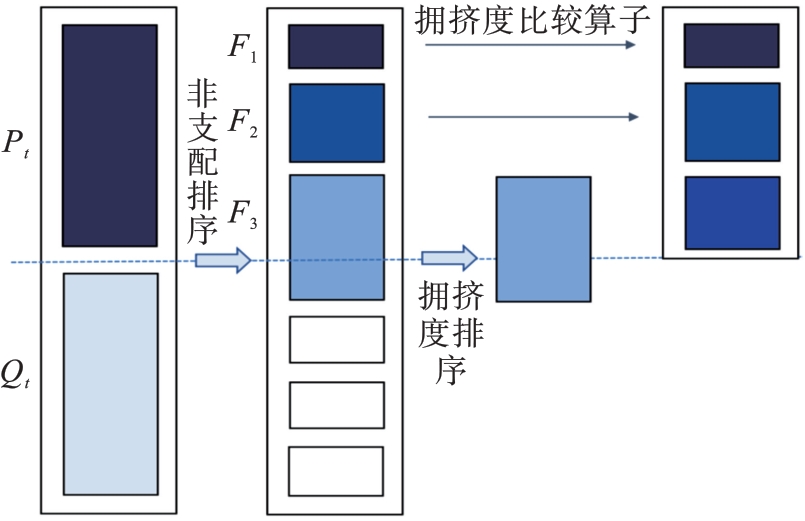
Fig.1 Traditional elite retention strategy rules
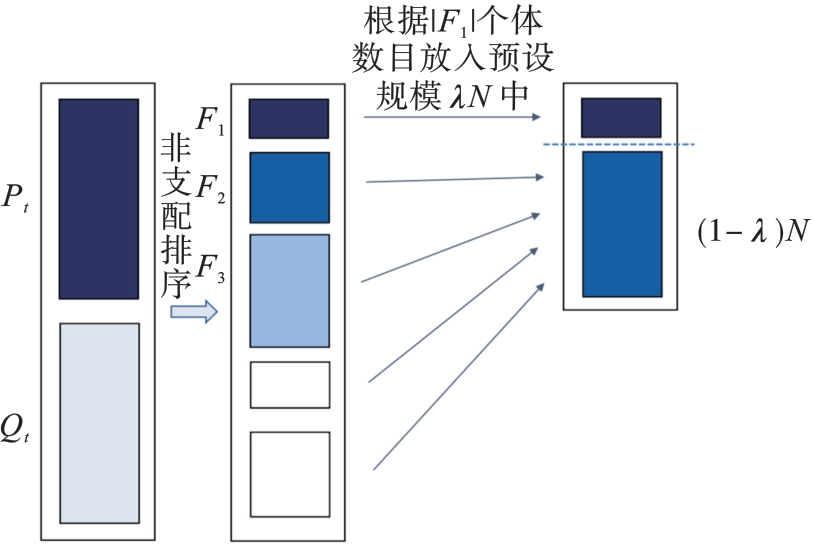
Fig.2 Adaptive elite retention strategy rules
| 货主编号 | 货源地经度/(°) | 货源地纬度/(°) | 目的地经度/(°) | 目的地纬度/(°) | 要求送达 时间/h | 货物质量/t |
|---|---|---|---|---|---|---|
| 1 | 120.343 7 | 30.289 2 | 117.217 4 | 39.153 4 | 16 | 28 |
| 2 | 120.959 4 | 30.051 9 | 117.017 2 | 39.132 1 | 35 | 25 |
| 3 | 120.278 4 | 30.416 5 | 116.157 2 | 39.750 1 | 22 | 10 |
| … | … | … | … | … | … | … |
Table 2 Consignor information
| 货主编号 | 货源地经度/(°) | 货源地纬度/(°) | 目的地经度/(°) | 目的地纬度/(°) | 要求送达 时间/h | 货物质量/t |
|---|---|---|---|---|---|---|
| 1 | 120.343 7 | 30.289 2 | 117.217 4 | 39.153 4 | 16 | 28 |
| 2 | 120.959 4 | 30.051 9 | 117.017 2 | 39.132 1 | 35 | 25 |
| 3 | 120.278 4 | 30.416 5 | 116.157 2 | 39.750 1 | 22 | 10 |
| … | … | … | … | … | … | … |
| 车型 | 最大载重/t | 车辆自重/t | 单位碳排放/(kg·km-1) | 起步价/元 | 单价/(元·km-1) |
|---|---|---|---|---|---|
| 1 | 8 | 6.5 | 0.040 | 470 | 4.5 |
| 2 | 13 | 8.8 | 0.045 | 600 | 6.0 |
| 3 | 18 | 13.5 | 0.050 | 750 | 6.5 |
| 4 | 25 | 16.0 | 0.055 | 900 | 7.5 |
| 5 | 30 | 18.0 | 0.060 | 1 200 | 8.0 |
Table 3 Vehicle model information
| 车型 | 最大载重/t | 车辆自重/t | 单位碳排放/(kg·km-1) | 起步价/元 | 单价/(元·km-1) |
|---|---|---|---|---|---|
| 1 | 8 | 6.5 | 0.040 | 470 | 4.5 |
| 2 | 13 | 8.8 | 0.045 | 600 | 6.0 |
| 3 | 18 | 13.5 | 0.050 | 750 | 6.5 |
| 4 | 25 | 16.0 | 0.055 | 900 | 7.5 |
| 5 | 30 | 18.0 | 0.060 | 1 200 | 8.0 |
| 车主编号 | 车主经度/(°) | 车主纬度/(°) | 车型 |
|---|---|---|---|
| 1 | 120.257 6 | 30.227 5 | 2 |
| 2 | 119.886 9 | 29.179 0 | 5 |
| 3 | 120.259 4 | 30.096 7 | 4 |
| … | … | … | … |
Table 4 Car owner information
| 车主编号 | 车主经度/(°) | 车主纬度/(°) | 车型 |
|---|---|---|---|
| 1 | 120.257 6 | 30.227 5 | 2 |
| 2 | 119.886 9 | 29.179 0 | 5 |
| 3 | 120.259 4 | 30.096 7 | 4 |
| … | … | … | … |
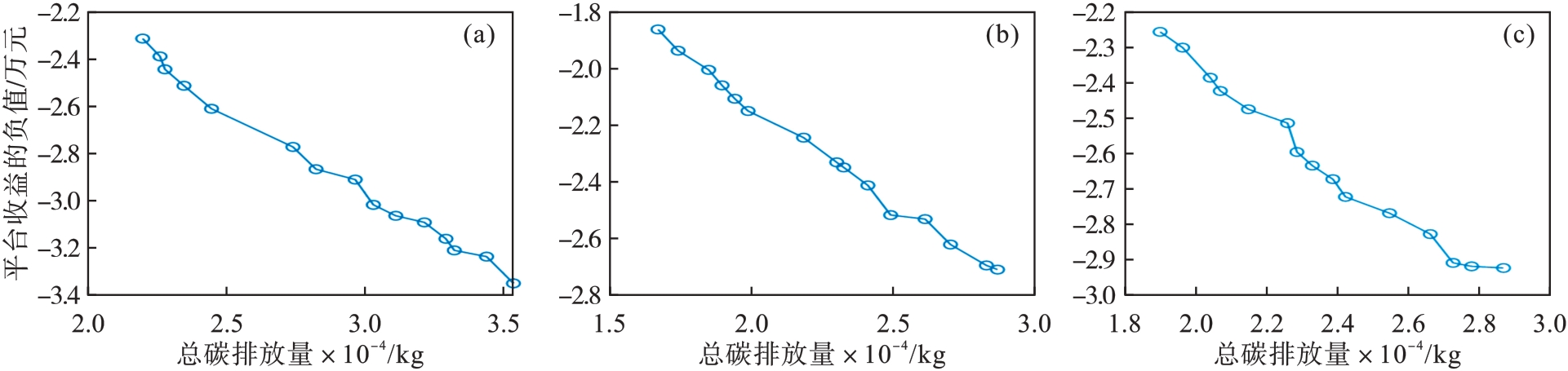
Fig.3 Solution results of the supply-demand ratio for three types of vehicle-cargo matching examples
| 规模 | 算法 | t/s | ||||
|---|---|---|---|---|---|---|
10货主与 20车主 | NSPSO | 0.469 9 | 0.001 732 | 0.052 0 | 0.000 463 | 1.365 8 |
| AERS-MPSO | 0.337 9 | 0.001 645 | 0.035 9 | 0.000 427 | 1.475 0 | |
| ND-MPSO | 0.536 6 | 0.001 794 | 0.056 0 | 0.000 504 | 1.586 0 | |
| 改进后的NSGA-Ⅱ[ | 0.523 4 | 0.001 691 | 0.045 9 | 0.000 472 | 1.768 0 | |
| MOGWO | 0.525 7 | 0.001 758 | 0.053 8 | 0.000 562 | 1.948 0 | |
| AERSND-MPSO | 0.527 0 | 0.001 506 | 0.037 1 | 0.000 384 | 1.759 2 | |
30货主与 50车主 | NSPSO | 1.326 7 | 0.012 829 | 0.113 9 | 0.000 205 | 2.854 0 |
| AERS-MPSO | 1.312 2 | 0.011 830 | 0.088 3 | 0.000 194 | 2.879 0 | |
| ND-MPSO | 1.528 7 | 0.013 730 | 0.121 3 | 0.000 210 | 2.899 0 | |
| 改进后的NSGA-Ⅱ[ | 1.450 3 | 0 .009 435 | 0.106 6 | 0.000 190 | 3.780 0 | |
| MOGWO | 1.480 4 | 0.011 250 | 0.120 5 | 0.002 58 | 4.386 0 | |
| AERSND-MPSO | 1.524 5 | 0.008 220 | 0.098 2 | 0.000 183 | 3.682 4 | |
60货主与 100车主 | NSPSO | 1.821 8 | 0.008 236 | 0.109 0 | 0.000 268 | 4.684 0 |
| AERS-MPSO | 1.627 2 | 0.008 046 | 0.086 3 | 0.000 210 | 4.703 4 | |
| ND-MPSO | 2.578 4 | 0.007 945 | 0.114 6 | 0.000 238 | 4.824 5 | |
| 改进后的NSGA-Ⅱ[ | 2.035 0 | 0.007 682 | 0.098 6 | 0.000 184 | 5.895 3 | |
| MOGWO | 2.494 0 | 0.008 280 | 0.123 8 | 0.000 305 | 7.059 0 | |
| AERSND-MPSO | 2.567 0 | 0.006 370 | 0.086 6 | 0.000 140 | 5.273 0 |
Table 5 Comparison of performance indicators for six algorithms
| 规模 | 算法 | t/s | ||||
|---|---|---|---|---|---|---|
10货主与 20车主 | NSPSO | 0.469 9 | 0.001 732 | 0.052 0 | 0.000 463 | 1.365 8 |
| AERS-MPSO | 0.337 9 | 0.001 645 | 0.035 9 | 0.000 427 | 1.475 0 | |
| ND-MPSO | 0.536 6 | 0.001 794 | 0.056 0 | 0.000 504 | 1.586 0 | |
| 改进后的NSGA-Ⅱ[ | 0.523 4 | 0.001 691 | 0.045 9 | 0.000 472 | 1.768 0 | |
| MOGWO | 0.525 7 | 0.001 758 | 0.053 8 | 0.000 562 | 1.948 0 | |
| AERSND-MPSO | 0.527 0 | 0.001 506 | 0.037 1 | 0.000 384 | 1.759 2 | |
30货主与 50车主 | NSPSO | 1.326 7 | 0.012 829 | 0.113 9 | 0.000 205 | 2.854 0 |
| AERS-MPSO | 1.312 2 | 0.011 830 | 0.088 3 | 0.000 194 | 2.879 0 | |
| ND-MPSO | 1.528 7 | 0.013 730 | 0.121 3 | 0.000 210 | 2.899 0 | |
| 改进后的NSGA-Ⅱ[ | 1.450 3 | 0 .009 435 | 0.106 6 | 0.000 190 | 3.780 0 | |
| MOGWO | 1.480 4 | 0.011 250 | 0.120 5 | 0.002 58 | 4.386 0 | |
| AERSND-MPSO | 1.524 5 | 0.008 220 | 0.098 2 | 0.000 183 | 3.682 4 | |
60货主与 100车主 | NSPSO | 1.821 8 | 0.008 236 | 0.109 0 | 0.000 268 | 4.684 0 |
| AERS-MPSO | 1.627 2 | 0.008 046 | 0.086 3 | 0.000 210 | 4.703 4 | |
| ND-MPSO | 2.578 4 | 0.007 945 | 0.114 6 | 0.000 238 | 4.824 5 | |
| 改进后的NSGA-Ⅱ[ | 2.035 0 | 0.007 682 | 0.098 6 | 0.000 184 | 5.895 3 | |
| MOGWO | 2.494 0 | 0.008 280 | 0.123 8 | 0.000 305 | 7.059 0 | |
| AERSND-MPSO | 2.567 0 | 0.006 370 | 0.086 6 | 0.000 140 | 5.273 0 |
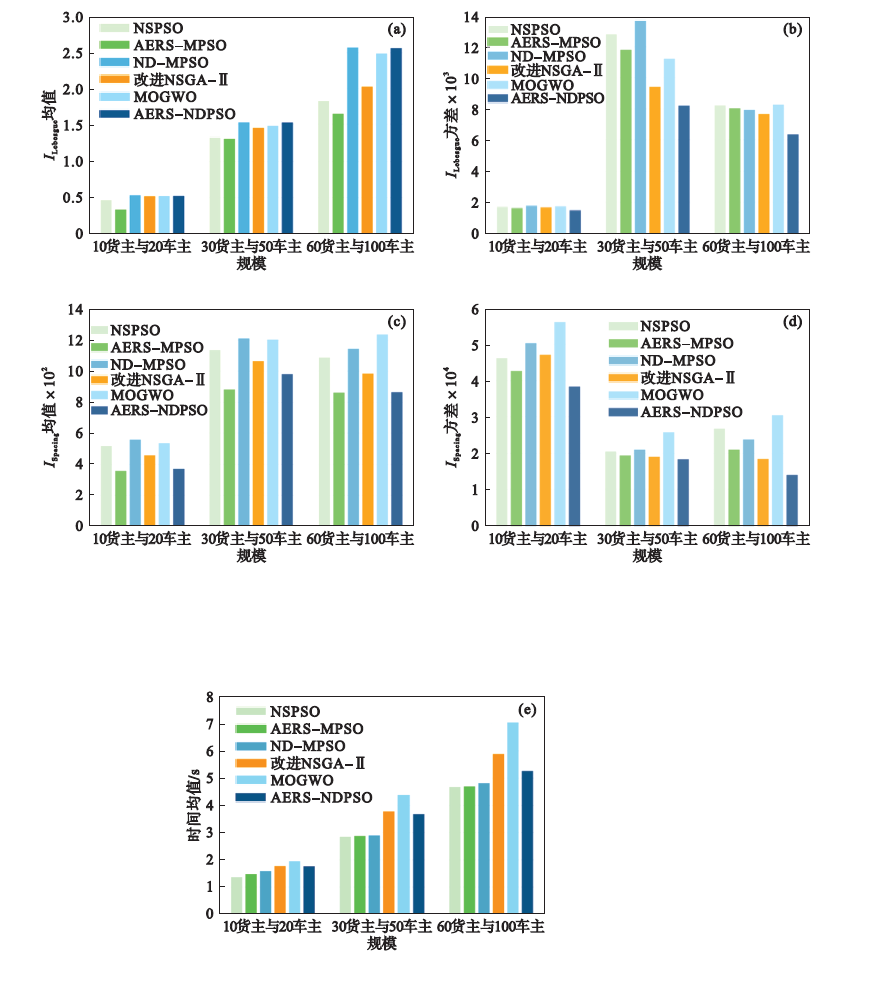
Fig.4 Comparison of performance indicators of six algorithms under three different scales
| 指标 | 算法 | p值 | ||
|---|---|---|---|---|
| 10货主与20车主 | 30货主与50车主 | 60货主与100车主 | ||
| Al0与AL1 | 0.008 | 0.001 | 0.000 | |
| Al0与AL2 | 0.851 | 0.111 | 0.000 | |
| Al0与AL3 | 0.946 | 0.356 | 0.073 | |
| Al0与AL1 | 0.133 | 0.022 | 0.003 | |
| Al0与 AL2 | 0.368 | 0.186 | 0.049 | |
| Al0与AL3 | 0.114 | 0.004 | 0.000 | |
Table 6 Significance test of p-values obtained by AERSND-MPSO algorithm and other algorithms on problems
| 指标 | 算法 | p值 | ||
|---|---|---|---|---|
| 10货主与20车主 | 30货主与50车主 | 60货主与100车主 | ||
| Al0与AL1 | 0.008 | 0.001 | 0.000 | |
| Al0与AL2 | 0.851 | 0.111 | 0.000 | |
| Al0与AL3 | 0.946 | 0.356 | 0.073 | |
| Al0与AL1 | 0.133 | 0.022 | 0.003 | |
| Al0与 AL2 | 0.368 | 0.186 | 0.049 | |
| Al0与AL3 | 0.114 | 0.004 | 0.000 | |
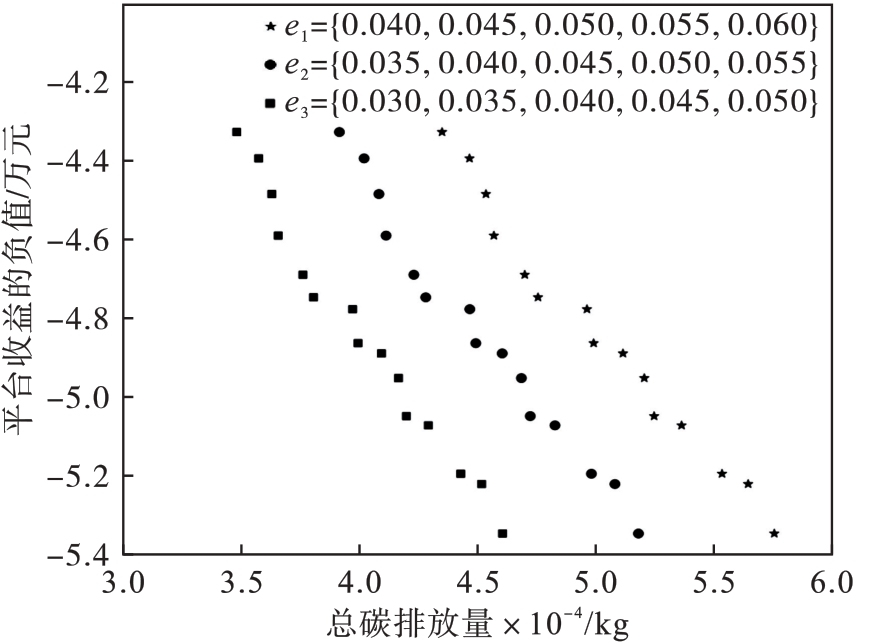
Fig.5 Impact of ei change on total carbon emissions
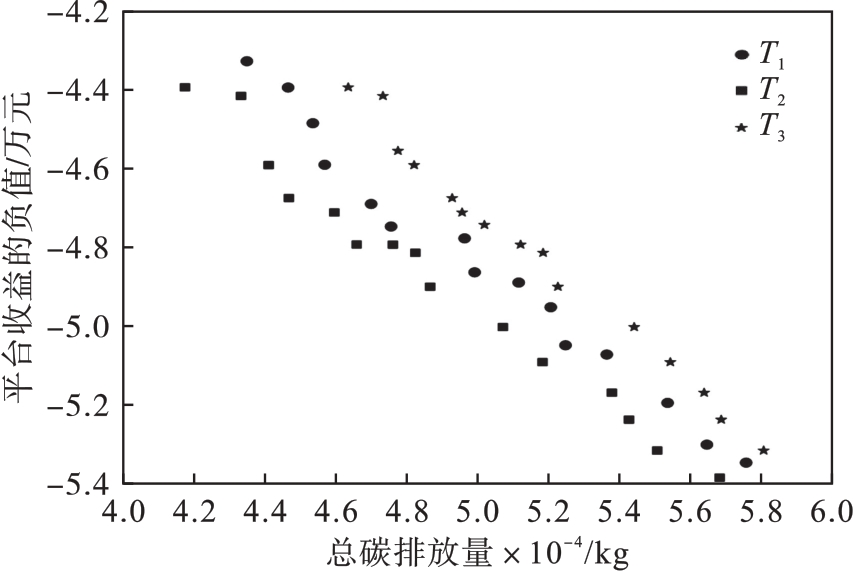
Fig.6 Impact of Tj change on total carbon emissions
| 横坐标范围×10-4/kg | 1.406 2 | 1.506 8 | 1.170 8 |
Table 7 Range of abscissas spanned by three
| 横坐标范围×10-4/kg | 1.406 2 | 1.506 8 | 1.170 8 |
| [1] | 交通运输部. 2022年交通运输行业发展统计公报[EB/OL].(2023-06-21)[2023-09-10].. |
| Ministry of Transport. Statistical bulletin on the development of the transportation industry in 2022 [EB/OL].(2023-06-21 2023-09-10].) | |
| [2] | 胡觉亮,邴聪,韩曙光.基于TS算法的公路干线货运平台车货匹配研究[J].浙江理工大学学报(社会科学版),2018,40(5):478-486. |
| Hu Jue-liang, Bing Cong, Han Shu-guang. Study on vehicles and goods matching of arterial road freight platform based on TS algorithm[J]. Journal of Zhejiang Sci-Tech University (Social Sciences), 2018, 40(5): 478-486. | |
| [3] | Wang H F, Huang M, Kuang H B. One-to-one stable vehicle cargo matching in the fourth party logistics[C]//2021 33rd Chinese Control and Decision Conference (CCDC). Kunming, 2021: 4221-4226. |
| [4] | Sun Y D, Zhang J, Tang Q Y, et al. Research on benefit-risk of vehicle-cargo matching platform based on matching degree[C]//2020 IEEE 5th International Conference on Intelligent Transportation Engineering (ICITE). Beijing, 2020: 580-584. |
| [5] | Ling H F, Fu Y, Hua M, et al. An adaptive parameter controlled ant colony optimization approach for peer-to-peer vehicle and cargo matching[J]. IEEE Access, 2021, 9: 15764-15777. |
| [6] | Kong L, Huang M. Stable truckload matching in the vehicle-cargo matching platform[C]//2024 36th Chinese Control and Decision Conference (CCDC). Xi’an, 2024: 5817-5821. |
| [7] | Deng J X, Zhang H P, Wei S F. Prediction of vehicle-cargo matching probability based on dynamic Bayesian network[J]. International Journal of Production Research, 2021, 59(17): 5164-5178. |
| [8] | Huang Y X, Zhao L, Van Woensel T, et al. Time-dependent vehicle routing problem with path flexibility[J]. Transportation Research Part B: Methodological, 2017, 95: 169-195. |
| [9] | Elgharably N, Easa S, Nassef A, et al. Stochastic multi-objective vehicle routing model in green environment with customer satisfaction[J]. IEEE Transactions on Intelligent Transportation Systems, 2022, 24(1): 1337-1355. |
| [10] | Yu Y, Tang J F, Li J, et al. Reducing carbon emission of pickup and delivery using integrated scheduling[J]. Transportation Research Part D: Transport and Environment, 2016, 47: 237-250. |
| [11] | 周鲜成,吕阳,贺彩虹,等.考虑时变速度的多车场绿色车辆路径模型及优化算法[J].控制与决策,2022,37(2):473-482. |
| Zhou Xian-cheng, Yang Lyu, He Cai-hong, et al. Multi-depot green vehicle routing model and its optimization algorithm with time-varying speed[J]. Control and Decision, 2022, 37(2): 473-482. | |
| [12] | Bektas T, Laporte G. The pollution-routing problem[J]. Transportation Research Part B: Methodological, 2011, 45(8):1232-1250. |
| [13] | Deb K, Agrawal S, Pratap A, et al. A fast elitist non-dominated sorting genetic algorithm for multi-objective optimization: NSGA-II[C]// International Conference on Parallel Solving from Nature. Paris, 2000: 849-858. |
| [14] | Liu Q, Li X F, Liu H T, et al. Multi-objective metaheuristics for discrete optimization problems: a review of the state-of-the-art[J]. Applied Soft Computing, 2020, 93: 106382. |
| [15] | 倪少权,罗轩,肖斌.考虑三方利益的车货匹配优化[J].西南交通大学学报,2023,58(1):48-57. |
| Ni Shao-quan, Luo Xuan, Xiao Bin. Optimization of vehicle-cargo matching regarding interests of three parties[J]. Journal of Southwest Jiaotong University, 2023, 58(1): 48-57. | |
| [16] | Ala A, Goli A, Mirjalili S, et al. A fuzzy multi-objective optimization model for sustainable healthcare supply chain network design[J]. Applied Soft Computing, 2024, 150: 111012. |
| [1] | Zhu ZHU, Hang-yu LOU. Learning-Based NSGA-Ⅱ for Multi-objective Portfolio Optimization Problems [J]. Journal of Northeastern University(Natural Science), 2025, 46(9): 17-24. |
| [2] | Zhi-ao CAO, Chen-shuo MA. Charging and Discharging Scheduling for Electric Vehicles Based on Improved Multi-objective Chaotic Particle Swarm Optimization [J]. Journal of Northeastern University(Natural Science), 2025, 46(9): 1-8. |
| [3] | Shu-hong WANG, Hao-ran LI, Hong YIN, Fan GONG. Multi-objective Optimization of Fiber Foam Concrete Based on Response Surface Analysis [J]. Journal of Northeastern University(Natural Science), 2025, 46(6): 122-130. |
| [4] | Yang-jun WU, Zhen-ping LI, Hong-liang YAO, Sheng-dong HAN. Modeling and Optimization Design of Vehicle Powertrain System Considering Effect of Auxiliary Components [J]. Journal of Northeastern University(Natural Science), 2025, 46(4): 43-51. |
| [5] | Qi-long JIANG, Jian XU. Application of Improved PSO-PH-RRT* Algorithm in Intelligent Vehicle Path Planning [J]. Journal of Northeastern University(Natural Science), 2025, 46(3): 12-19. |
| [6] | Deng-hui LI, Yan ZHAO, Hong LEI, Jia FAN. Intelligent Prediction for Endpoint Mass Fraction of Carbon in Molten Steel of RH [J]. Journal of Northeastern University(Natural Science), 2025, 46(10): 51-58. |
| [7] | LIU Xiao-xi, JIANG Hui-yan, LUO Min. Multi-constraint Optimal Puncture Path Planning Algorithm for Liver Cancer Ablation [J]. Journal of Northeastern University(Natural Science), 2023, 44(7): 922-930. |
| [8] | LI Zhan-shan, SONG Zhi-yang, HUA Yun-qiao. A Multi-modal Multi-objective Optimization Algorithm Based on Adaptive Search [J]. Journal of Northeastern University(Natural Science), 2023, 44(10): 1408-1415. |
| [9] | ZHANG Rui-you, WANG Chao-hui, CHEN Yong-qiang. Lyapunov Method for Solving Nonlinear Programming Problems Based on Control Ideas [J]. Journal of Northeastern University(Natural Science), 2021, 42(9): 1217-1226. |
| [10] | MA Lian-jie, ZUO Yu-chen, ZHOU Yun-guang, FU Hai-ling. Multi-objective Optimization of Tool Geometry Parameters in Turning Zirconia Ceramics [J]. Journal of Northeastern University Natural Science, 2020, 41(8): 1129-1134. |
| [11] | QI Xi-jing, TANG Liang, KANG Wei-xin, QIN Jiao-jiao. Multi-objective Decision-Making Method for Bridge Deck Maintenance Scheme for Highway [J]. Journal of Northeastern University Natural Science, 2020, 41(7): 1033-1040. |
| [12] | GONG Ya-dong, ZHANG Wei-jian, CAI Ming, ZHOU Xian-xin. Experimental Study on the Grinding Metamorphic Layer of Nickel-based Single Crystal Superalloy [J]. Journal of Northeastern University Natural Science, 2020, 41(6): 846-851. |
| [13] | TIAN Hui-xin, WANG Di, SHUAI Min-wei, LI Kun. Optimization of High-Speed Train Operation Plan for OD Passenger Flow [J]. Journal of Northeastern University Natural Science, 2020, 41(11): 1535-1542. |
| [14] | HOU Hui, YIN Yun, BU Man-man, HE Jie. Prediction of Carbon Emission and Selection of Optimal Scenario in Liaoning Province [J]. Journal of Northeastern University Natural Science, 2019, 40(8): 1211-1216. |
| [15] | SONG Hang, WANG Ya-li, LIU Guo-qi, ZHANG Bin. Web Service Composition Optimization Method Based on Improved Multi-objective Artificial Bee Colony Algorithm [J]. Journal of Northeastern University Natural Science, 2019, 40(6): 777-782. |
| Viewed | ||||||
|
Full text |
|
|||||
|
Abstract |
|
|||||
