
Journal of Northeastern University(Natural Science) ›› 2025, Vol. 46 ›› Issue (10): 18-26.DOI: 10.12068/j.issn.1005-3026.2025.20240058
• Information & Control • Previous Articles Next Articles
Xiao-peng SHA, De-han XIE, Zhou-peng GUO, Kai SUN
Received:2024-03-12
Online:2025-10-15
Published:2026-01-13
CLC Number:
Xiao-peng SHA, De-han XIE, Zhou-peng GUO, Kai SUN. LIDD-Net: Lightweight Industrial Product Defect Detection Method Based on Deep Learning[J]. Journal of Northeastern University(Natural Science), 2025, 46(10): 18-26.
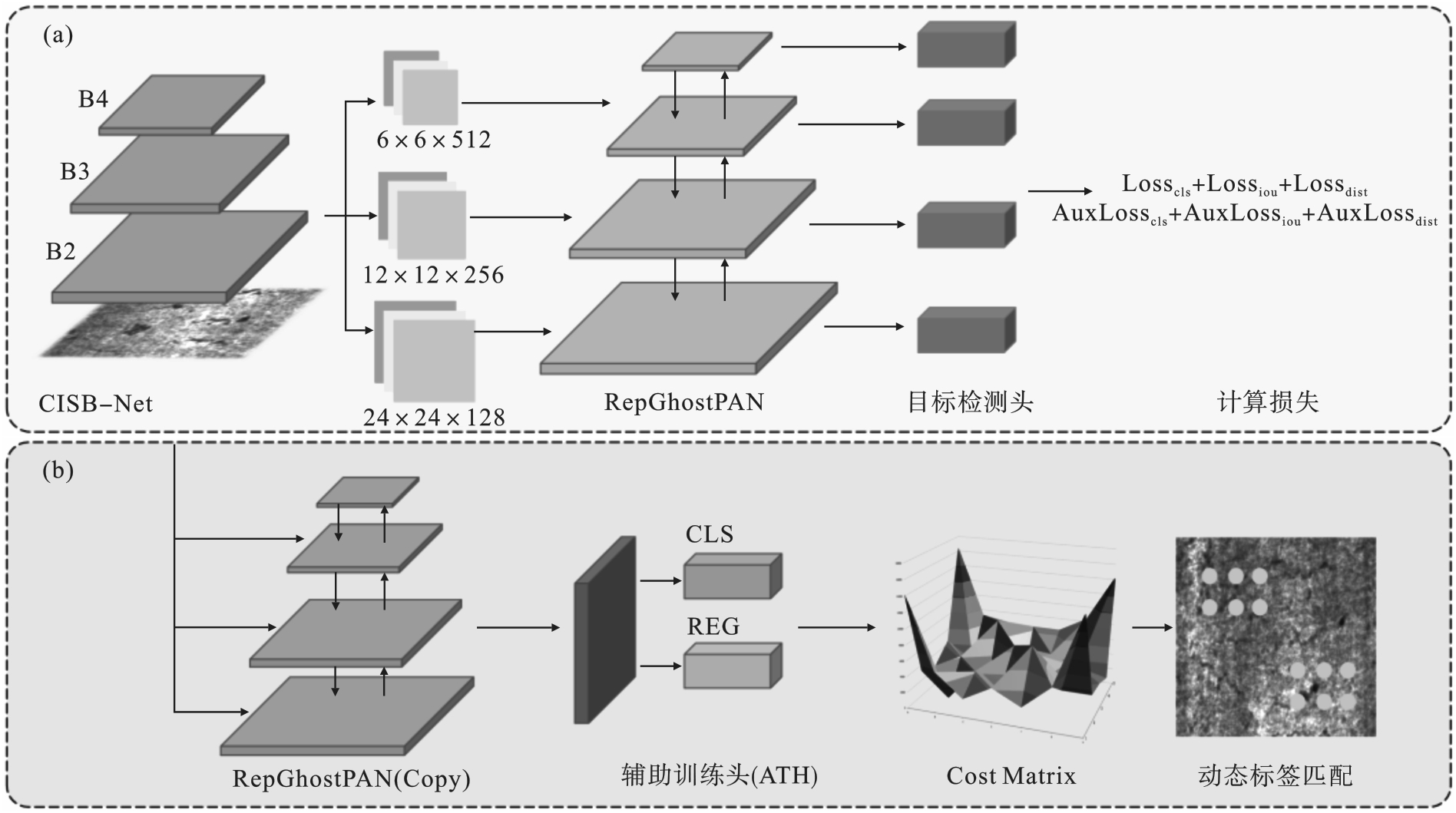
Fig.1 Overall structure of LIDD-Net
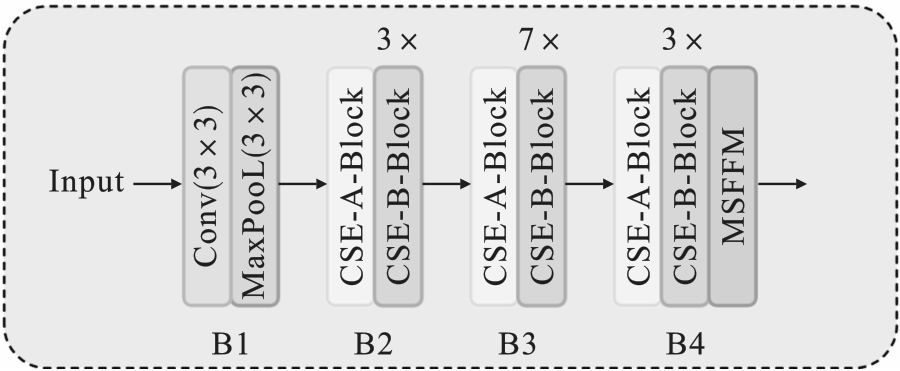
Fig.2 Structure of channel interaction separation backbone network
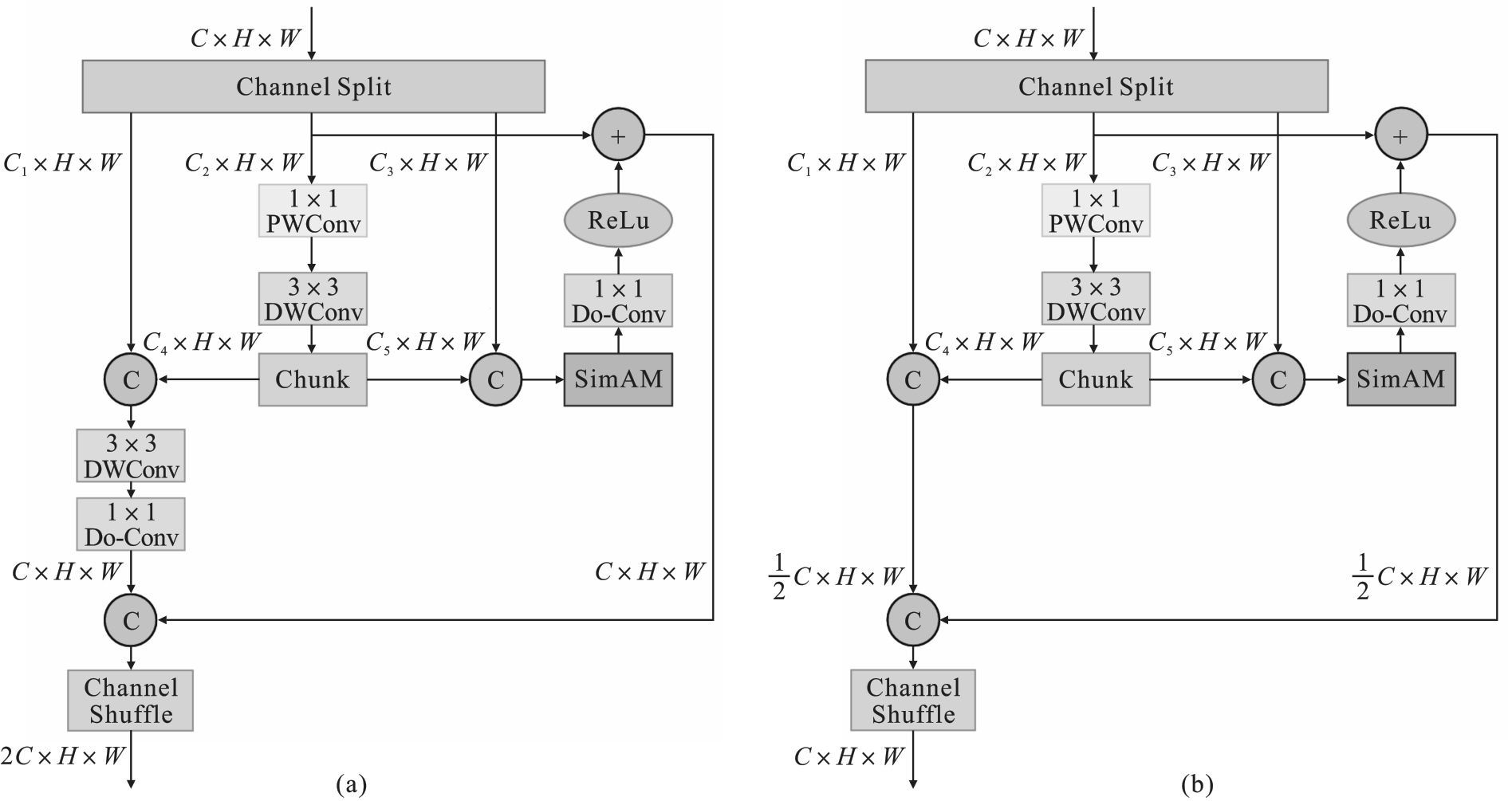
Fig.3 Channel separation enhancement module structure
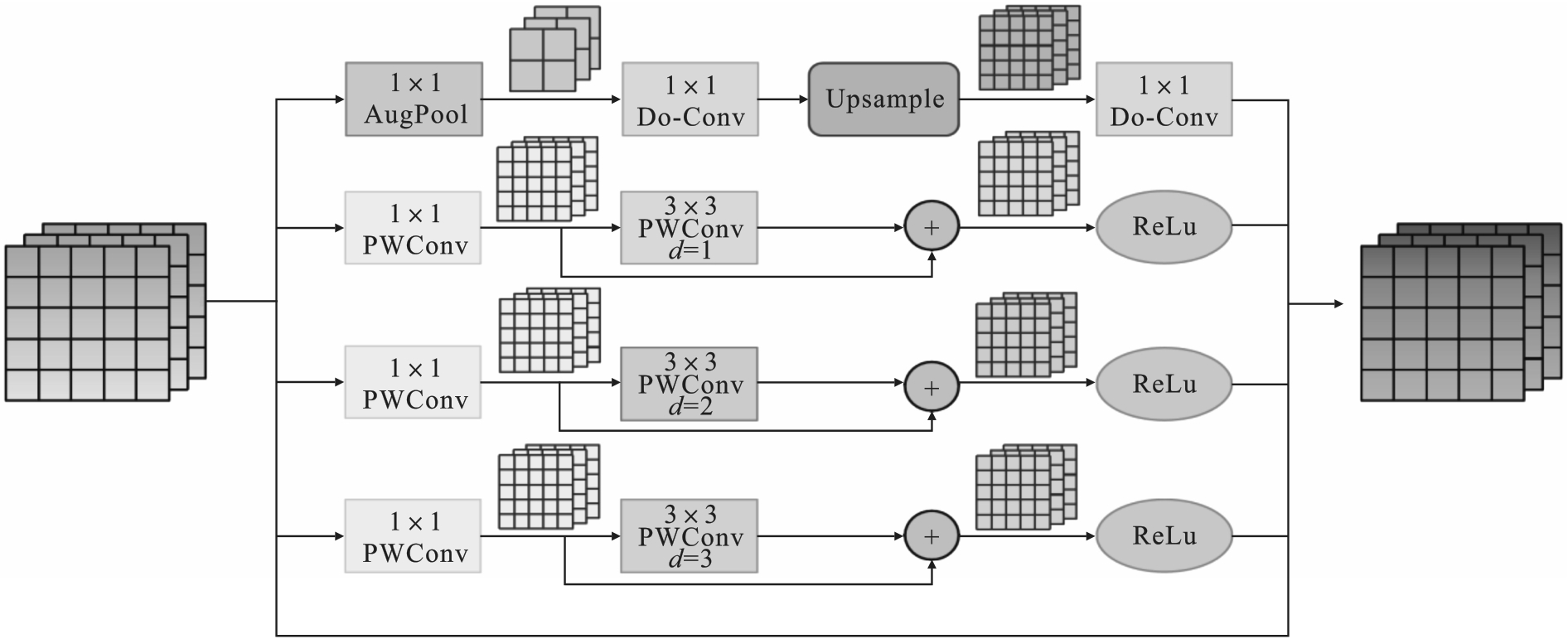
Fig.4 Structure of multi-scale feature fusion module
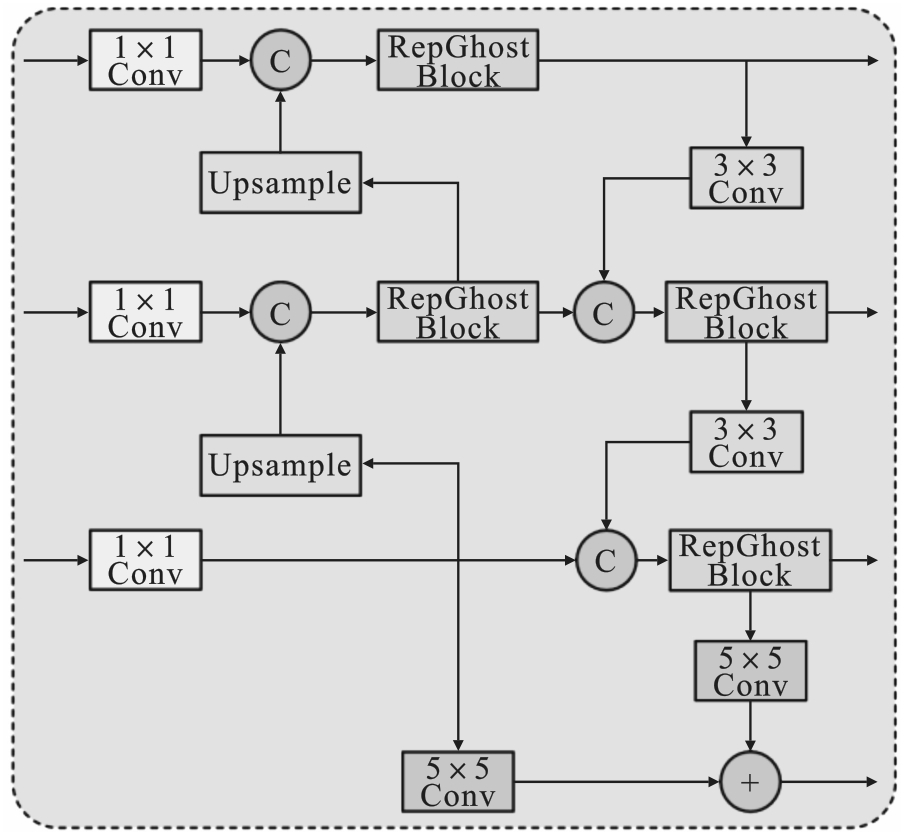
Fig.5 RepGhostPAN feature fusion network structure
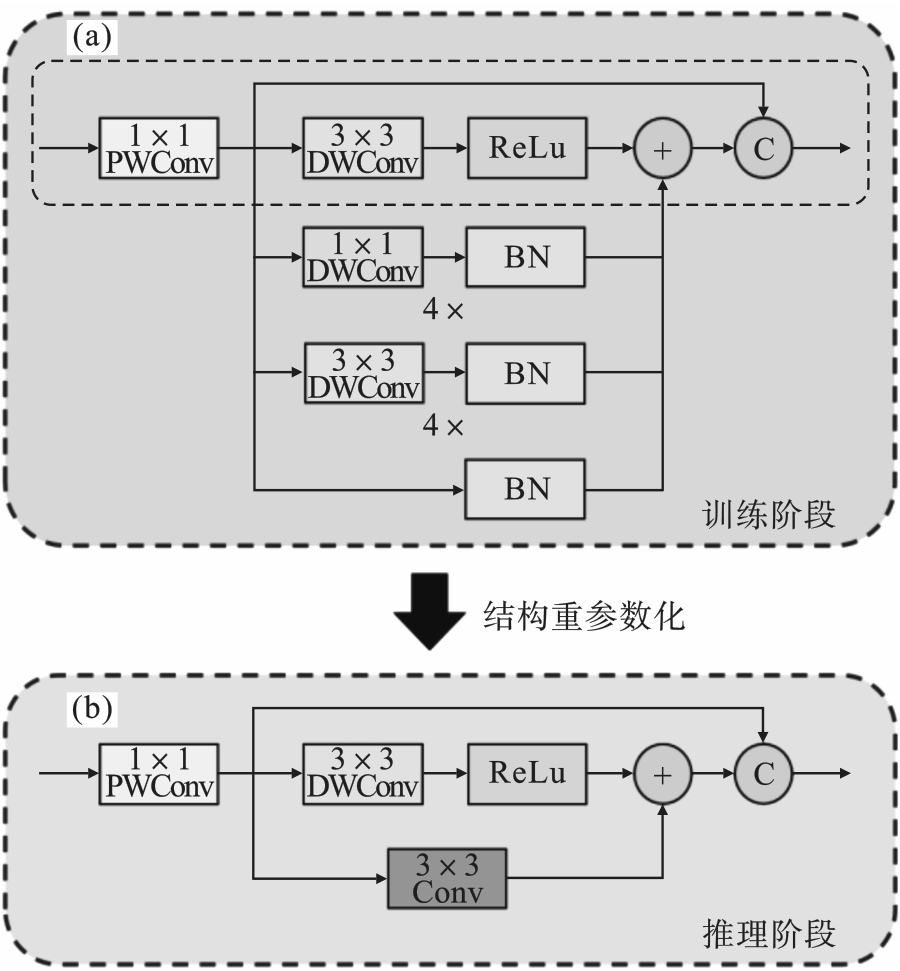
Fig.6 RepGhostBlock module structure
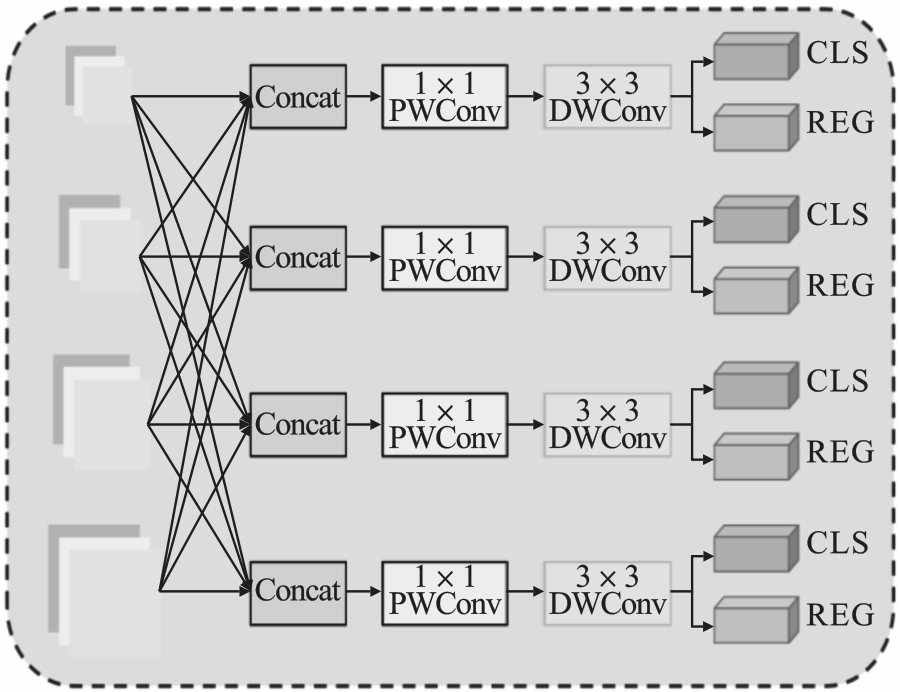
Fig.7 Auxiliary training head structure
| 操作系统 | Microsoft Windows 11 |
|---|---|
| CPU | Intel Core i5-13600 |
| GPU | NVIDIA GeForce RTX 4090,CUDA=12.2 |
| 运行环境 | Python 3.8,PyTorch 1.13 |
Table 1 Experimental environment
| 操作系统 | Microsoft Windows 11 |
|---|---|
| CPU | Intel Core i5-13600 |
| GPU | NVIDIA GeForce RTX 4090,CUDA=12.2 |
| 运行环境 | Python 3.8,PyTorch 1.13 |
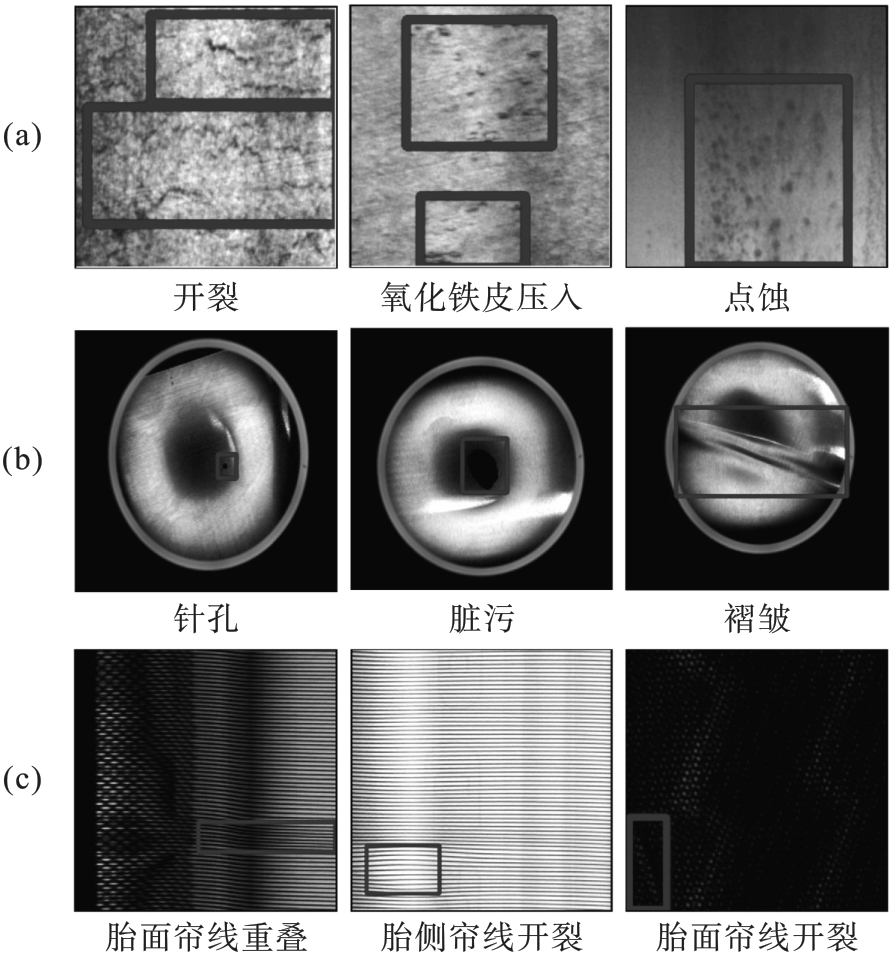
Fig.8 Examples of defects in industrial products
| 模型 | mAP@0.5/% | mAP@0.5:0.95/% | Params×10-6 | FLOPs×10-9 |
|---|---|---|---|---|
| BaseLine | 95.37 | 64.78 | 1.171 8 | 0.163 2 |
| +LATM | 96.68 | 66.76 | 1.171 8 | 0.163 2 |
| +CISB-Net | 98.06 | 72.42 | 0.620 3 | 0.109 7 |
| +RepGhostPAN | 98.30 | 73.26 | 0.628 7 | 0.110 4 |
Table 2 Ablation experiment on NEU-DET dataset
| 模型 | mAP@0.5/% | mAP@0.5:0.95/% | Params×10-6 | FLOPs×10-9 |
|---|---|---|---|---|
| BaseLine | 95.37 | 64.78 | 1.171 8 | 0.163 2 |
| +LATM | 96.68 | 66.76 | 1.171 8 | 0.163 2 |
| +CISB-Net | 98.06 | 72.42 | 0.620 3 | 0.109 7 |
| +RepGhostPAN | 98.30 | 73.26 | 0.628 7 | 0.110 4 |
| 网络 | mAP@0.5/% | mAP@0.5∶0.95/% | Params×10-6 | FLOPs×10-9 |
|---|---|---|---|---|
| YOLOv5n | 93.28 | 59.10 | 1.772 0 | 0.382 1 |
| YOLOv8n | 90.43 | 57.93 | 3.006 8 | 0.738 0 |
| YOLO-Fastestv2 | 88.02 | 55.72 | 0.237 6 | 0.003 4 |
| YOLOX-Nano | 95.92 | 61.14 | 0.897 7 | 0.114 9 |
| PP-PicoDet-S | 93.44 | 64.12 | 0.989 4 | 0.462 8 |
| Nanodet | 94.02 | 61.64 | 0.928 5 | 0.124 5 |
| Nanodet-plus | 96.62 | 66.79 | 1.172 6 | 0.166 5 |
| TOOD | 89.37 | 63.42 | 31.234 | 6.359 3 |
| Foveabox | 90.76 | 56.53 | 36.244 | 7.129 8 |
| LIDD-Net | 98.30 | 73.26 | 0.628 7 | 0.110 4 |
Table 3 Comparison experiment on NEU-DET dataset
| 网络 | mAP@0.5/% | mAP@0.5∶0.95/% | Params×10-6 | FLOPs×10-9 |
|---|---|---|---|---|
| YOLOv5n | 93.28 | 59.10 | 1.772 0 | 0.382 1 |
| YOLOv8n | 90.43 | 57.93 | 3.006 8 | 0.738 0 |
| YOLO-Fastestv2 | 88.02 | 55.72 | 0.237 6 | 0.003 4 |
| YOLOX-Nano | 95.92 | 61.14 | 0.897 7 | 0.114 9 |
| PP-PicoDet-S | 93.44 | 64.12 | 0.989 4 | 0.462 8 |
| Nanodet | 94.02 | 61.64 | 0.928 5 | 0.124 5 |
| Nanodet-plus | 96.62 | 66.79 | 1.172 6 | 0.166 5 |
| TOOD | 89.37 | 63.42 | 31.234 | 6.359 3 |
| Foveabox | 90.76 | 56.53 | 36.244 | 7.129 8 |
| LIDD-Net | 98.30 | 73.26 | 0.628 7 | 0.110 4 |
| 网络 | mAP@0.5/% | mAP@0.5∶0.95/% | Params×10-6 | FLOPs×10-9 |
|---|---|---|---|---|
| YOLOv5n | 96.48 | 51.89 | 1.772 0 | 1.061 4 |
| YOLOv8n | 95.53 | 50.82 | 3.006 8 | 2.049 9 |
| YOLO-Fastestv2 | 80.51 | 44.83 | 0.237 6 | 0.094 4 |
| YOLOX-Nano | 91.69 | 50.99 | 0.897 7 | 0.319 2 |
| PP-PicoDet-S | 96.24 | 51.64 | 0.989 4 | 0.730 2 |
| Nanodet | 95.84 | 51.31 | 0.928 5 | 0.345 6 |
| Nanodet-plus | 96.43 | 50.82 | 1.172 6 | 0.462 1 |
| TOOD | 82.74 | 43.62 | 31.234 | 17.578 |
| Foveabox | 83.62 | 43.86 | 36.244 | 19.793 |
| LIDD-Net | 98.12 | 52.76 | 0.628 7 | 0.306 4 |
Table 4 Comparison experiment on aluminum surface defect dataset
| 网络 | mAP@0.5/% | mAP@0.5∶0.95/% | Params×10-6 | FLOPs×10-9 |
|---|---|---|---|---|
| YOLOv5n | 96.48 | 51.89 | 1.772 0 | 1.061 4 |
| YOLOv8n | 95.53 | 50.82 | 3.006 8 | 2.049 9 |
| YOLO-Fastestv2 | 80.51 | 44.83 | 0.237 6 | 0.094 4 |
| YOLOX-Nano | 91.69 | 50.99 | 0.897 7 | 0.319 2 |
| PP-PicoDet-S | 96.24 | 51.64 | 0.989 4 | 0.730 2 |
| Nanodet | 95.84 | 51.31 | 0.928 5 | 0.345 6 |
| Nanodet-plus | 96.43 | 50.82 | 1.172 6 | 0.462 1 |
| TOOD | 82.74 | 43.62 | 31.234 | 17.578 |
| Foveabox | 83.62 | 43.86 | 36.244 | 19.793 |
| LIDD-Net | 98.12 | 52.76 | 0.628 7 | 0.306 4 |
| 网络 | mAP@0.5/% | mAP@0.5∶0.95/% | Params×10-6 | FLOPs×10-9 |
|---|---|---|---|---|
| YOLOv5n | 94.82 | 54.12 | 1.772 0 | 2.388 2 |
| YOLOv8n | 95.33 | 55.62 | 3.006 8 | 4.612 2 |
| YOLO-Fastestv2 | 84.48 | 49.87 | 0.237 6 | 0.212 4 |
| YOLOX-Nano | 94.52 | 54.38 | 0.897 7 | 0.717 7 |
| PP-PicoDet-S | 90.80 | 54.32 | 0.989 4 | 1.462 5 |
| Nanodet | 93.54 | 54.46 | 0.928 5 | 0.778 5 |
| Nanodet-plus | 94.86 | 55.56 | 1.172 6 | 1.040 1 |
| TOOD | 90.24 | 53.22 | 31.234 | 39.742 |
| Foveabox | 86.36 | 50.62 | 36.244 | 44.586 |
| LIDD-Net | 96.13 | 56.32 | 0.628 7 | 0.689 9 |
Table 5 Comparison experiment on tire defect dataset
| 网络 | mAP@0.5/% | mAP@0.5∶0.95/% | Params×10-6 | FLOPs×10-9 |
|---|---|---|---|---|
| YOLOv5n | 94.82 | 54.12 | 1.772 0 | 2.388 2 |
| YOLOv8n | 95.33 | 55.62 | 3.006 8 | 4.612 2 |
| YOLO-Fastestv2 | 84.48 | 49.87 | 0.237 6 | 0.212 4 |
| YOLOX-Nano | 94.52 | 54.38 | 0.897 7 | 0.717 7 |
| PP-PicoDet-S | 90.80 | 54.32 | 0.989 4 | 1.462 5 |
| Nanodet | 93.54 | 54.46 | 0.928 5 | 0.778 5 |
| Nanodet-plus | 94.86 | 55.56 | 1.172 6 | 1.040 1 |
| TOOD | 90.24 | 53.22 | 31.234 | 39.742 |
| Foveabox | 86.36 | 50.62 | 36.244 | 44.586 |
| LIDD-Net | 96.13 | 56.32 | 0.628 7 | 0.689 9 |
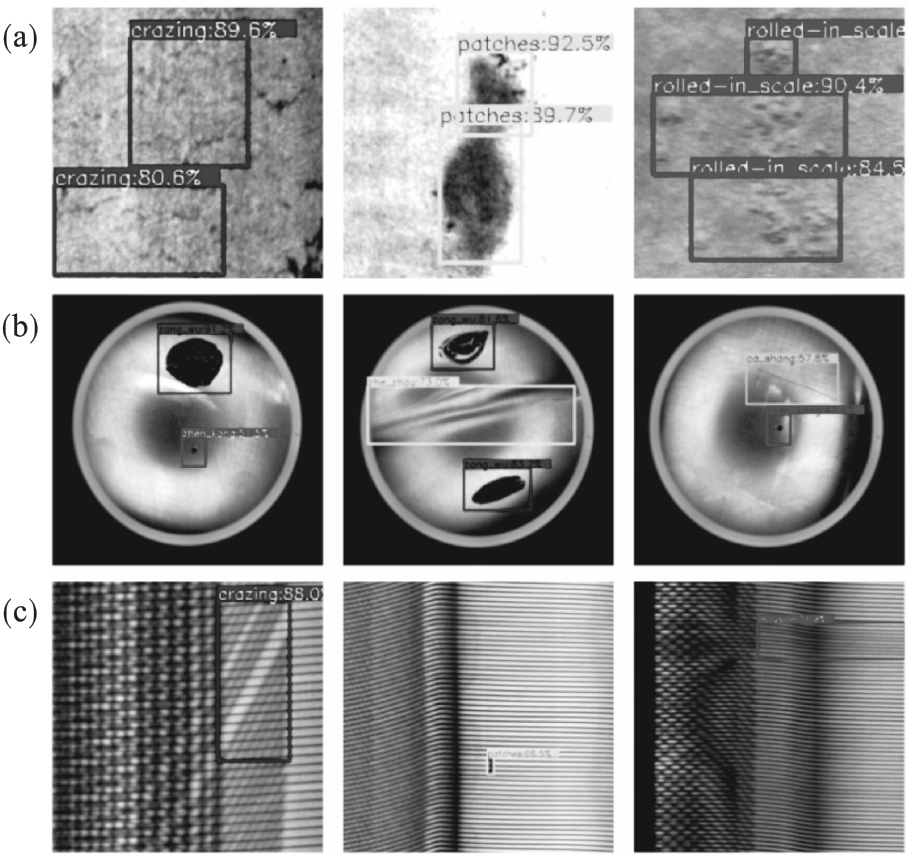
Fig.9 Detection results of LIDD-Net
| [1] | Shen X K, Liu J H, Jiang L, et al. A novel weld defect detection method for intelligent magnetic flux leakage detection system via contextual relation network[J]. IEEE Transactions on Industrial Electronics, 2024, 71(6): 6304-6314. |
| [2] | Zong Z F, Song G L, Liu Y. DETRs with collaborative hybrid assignments training[C]// Proceedings of the IEEE Conference on International Conference on Computer Vision. Paris, 2023: 6725-6735. |
| [3] | Yu Z P, Huang H B, Chen W J, et al. YOLO-FaceV2: a scale and occlusion aware face detector[J]. Pattern Recognition, 2024, 155: 110714. |
| [4] | Ding X H, Zhang X Y, Ma N N, et al. RepVGG: making VGG-style convnets great again[C] // Proceedings of the IEEE Conference on Computer Vision and Pattern Recognition. Virtual, 2021: 13733-13742. |
| [5] | Lei Y, Chen Y R, Hai T, et al. DGNet: an adaptive lightweight defect detection model for new energy vehicle battery current collector[J]. IEEE Sensors Journal, 2023, 23: 29812-29830. |
| [6] | Ye L Q. AugShuffleNet: communicate more, compute less [EB/OL]. (2022-03-13) [2022-08-21]. . |
| [7] | Yang L X, Zhang R Y, Li L D, et al. SimAM: a simple, parameter-free attention module for convolutional neural networks[C]// International Conference on Machine Learning. Virtual, 2021: 11863-11874. |
| [8] | Cao J M, Li Y Y, Sun M C, et al. Do-Conv: depthwise over-parameterized convolutional layer[J]. IEEE Transactions on Image Processing, 2022, 31: 3726-3736. |
| [9] | Filippas D, Nicopoulos C, Dimitrakopoulos G. Streaming dilated convolution engine[J]. IEEE Transactions on Very Large Scale Integration (VLSI) Systems, 2023, 31: 401-405. |
| [10] | Shamsolmoali P, Chanussot J, Zareapoor M, et al. Multipatch feature pyramid network for weakly supervised object detection in optical remote sensing images[J]. IEEE Transactions on Geoscience and Remote Sensing, 2022, 60: 1-13. |
| [11] | Han K, Wang Y H, Tian Q, et al. Ghostnet: more features from cheap operations[C]// Proceedings of the IEEE Conference on Computer Vision and Pattern Recognition. Virtual, 2020: 1580-1589. |
| [12] | Mishra R, Gupta H P. Designing and training of lightweight neural networks on edge devices using early halting in knowledge distillation[J]. IEEE Transactions on Mobile Computing, 2024, 23: 4665-4677. |
| [1] | Ying WEI, Jia-peng ZHANG, Jia-qi CUI, Tong HUANG. Two-Stage SiamCAR Tracking Algorithm Combining Motion Information and Dual-attention Mechanism [J]. Journal of Northeastern University(Natural Science), 2025, 46(9): 9-16. |
| [2] | Yu-tao WANG, Jun-wei AN, Chang-sheng QIN, Wei-fan GUO. Research on Localization of Industrial Intelligent Inspection Robots in Cable Tunnel Environment [J]. Journal of Northeastern University(Natural Science), 2025, 46(7): 49-58. |
| [3] | Hui LI, Xiao-fei HAN, Wan-cheng ZHU, Jia-shi MAO. Mine Slope Displacement Prediction Based on ICEEMDAN and Attention-LSTM [J]. Journal of Northeastern University(Natural Science), 2025, 46(7): 163-170. |
| [4] | Zhen-zhen LYU, Li-jin FANG, Qian-kun ZHAO, Ying-cai WAN. Defect Detection on PCB Based on Improved YOLOv8 [J]. Journal of Northeastern University(Natural Science), 2025, 46(10): 1-9. |
| [5] | Hai-yan LI, Ren-chao QIAO, Hai-jiang LI, Quan CHEN. CNN-Transformer Dehazing Algorithm Based on Global Residual Attention and Gated Feature Fusion [J]. Journal of Northeastern University(Natural Science), 2025, 46(1): 26-34. |
| [6] | Yan LIU, Qi-jie BU, Hong-chen ZHAO, Xin GUO. Operating Performance Assessment of Flotation Process Based on Multi-source Heterogeneous Information [J]. Journal of Northeastern University(Natural Science), 2024, 45(9): 1217-1226. |
| [7] | An-lin TIAN, Wei-min LEI, Peng ZHANG, Wei ZHANG. A Multi-scale Edge Detection Method Based on Encoder-Decoder [J]. Journal of Northeastern University(Natural Science), 2024, 45(7): 936-943. |
| [8] | Wei-wei LIU, Jia-he QIU, Guang-da HU, Ze-yuan LIU. Surface Damage Detection Method for Retired Shaft Parts Based on Improved YOLOv5 [J]. Journal of Northeastern University(Natural Science), 2024, 45(7): 1002-1010. |
| [9] | Yuan MA, Li-huang SHE, Jia-wei LI, Xi-rong BAO. Adaptive Graph Convolutional 3D Point Cloud Recognition Algorithm Based on Attention Mechanism [J]. Journal of Northeastern University(Natural Science), 2024, 45(6): 786-792. |
| [10] | Li-xin GUO, Su-tao BI, Ming-yang ZHAO. State Detection Algorithm of Manipulator Based on Improved YOLOv4 Lightweight Network [J]. Journal of Northeastern University(Natural Science), 2024, 45(6): 769-775. |
| [11] | Hu FENG, Ke-chen SONG, Wen-qi CUI, Yun-hui YAN. Few-Shot Semantic Segmentation of Strip Steel Surface Defects Based on Meta-Learning [J]. Journal of Northeastern University(Natural Science), 2024, 45(3): 354-360. |
| [12] | Bo HAO, Xin-yan XU, Yu-xin ZHAO, Jun-wei YAN. Surface Defect Detection of Riveting Holes Based on Improved YOLOv8 [J]. Journal of Northeastern University(Natural Science), 2024, 45(11): 1595-1603. |
| [13] | Zhi-jin ZHANG, He LI, Yu-shi HUANG, Wen-xue WANG. Application of Deep Residual Shrinkage Network in Rolling Bearing Fault Diagnosis [J]. Journal of Northeastern University(Natural Science), 2024, 45(11): 1587-1594. |
| [14] | Meng-yuan LIU, Zhao-xia WU, Jin-yang WANG, Guang-lei XIA. Air Permeability Prediction of Sinter Layer Based on TST-LSTM Model [J]. Journal of Northeastern University(Natural Science), 2024, 45(10): 1379-1385. |
| [15] | Ying SUN, Ya-ru ZHOU, Xue-ying ZHANG. Speech Emotion Recognition Fusing Functional Paralanguage Proportion Coefficient [J]. Journal of Northeastern University(Natural Science), 2024, 45(1): 40-48. |
| Viewed | ||||||
|
Full text |
|
|||||
|
Abstract |
|
|||||
